

Wantage
Wantage is the market town at the centre of this guide, on Letcombe Brook where the Berkshire Downs meet the Vale of White Horse. It is best known as the birthplace of King Alfred, whose statue stands in the Market Place.
Around the Market Place and the streets off it are the town's pubs, cafés and restaurants, the Vale & Downland Museum and The Beacon, and six mapped walks start from or pass through the town.
513local listings
Filters
Category
Good to know
Cuisine
Results


Helen & Douglas House Charity Shop (Wantage)
Closed todayThe Helen & Douglas House charity shop at 4 Market Place in Wantage is a boutique-style shop selling…
Helping Hands Home Care Wantage
Open now · until 17:30Compassionate care at home, one Helping Hand at a time.

Holiday Ark Pet Services
Holiday Ark Pet Services is based on Cherry Croft in Wantage and offers dog walking, licensed home dog…

Holland & Barrett
Fuel your wellness journey with Holland & Barrett's natural solutions.
Home Bargains Wantage
Open now · until 16:00Brand names for less, everything you need under one roof.
Home Town Salon
Closed todayStep back in time and treat yourself to beauty and bubbles.

Hope Therapy and Counselling Services
Counselling and coaching for individuals, couples and families, face to face and online.
Huckleberry Therapeutic School
Huckleberry Therapeutic School is a small independent special school on Manor Road in Wantage. It teaches primary-age children…

Hummels Brickwork Ltd
Closed todayBuilding with pride, from family to communities. Hummel's exceptional craftsmanship.

In Fine Spirits
In Fine Spirits in Wantage hires out retro VW camper vans for events. The vans serve wood-fired sourdough…


InPost Parcel Locker
The InPost Parcel Locker at Sainsbury's on Limborough Road in Wantage is a self-service locker for collecting and…

J Jenkin & Associates Ltd
Efficient, expert advice and low fees. Keep more of your profits.
James Mitchell Music Lessons
Unlock your musical potential with expert piano and singing lessons.

Jason Green Mechanics
Experience the smooth ride with Jason Green Mechanics - servicing all!
Jeni Ray Reiki
Jeni Ray is a Reiki Master practitioner offering in-person Reiki at the Wantage Natural Therapy Centre, 34A Market…
Jog Wantage (Couch to 5k)
Ten-week spring beginners' running course led by White Horse Harriers volunteers, finishing
John Gunter Arts
John Gunter Arts is the work of a Wantage painter of seascapes and other subjects in oils. He…
Know a business or club in Wantage?
Listings are free. Add a local business, club, group or service and we will check it and put it live, usually within a day.
Wantage: a short history
Wantage today
Wantage is a market town of about 13,000 people where the Berkshire Downs meet the Vale of White Horse. Letcombe Brook runs through it, and the Ridgeway follows the Downs about two miles south. It was a Berkshire town until 1974 and is now in Oxfordshire.
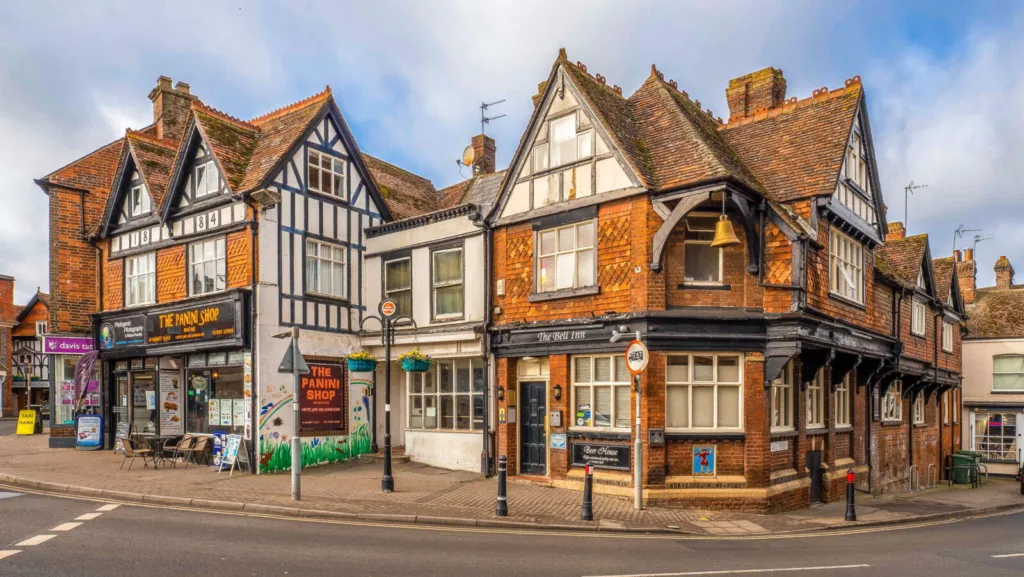
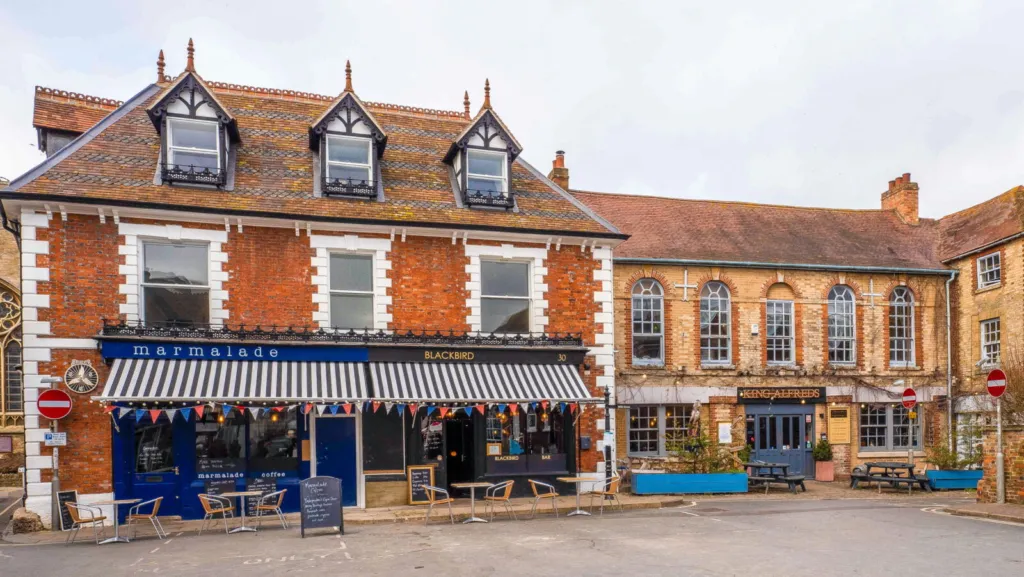
The Market Place, with King Alfred’s statue and Georgian and older frontages, holds markets on Wednesdays and Saturdays. The medieval parish church is just to the south, the Vale and Downland Museum is in Church Street, and Betjeman Millennium Park follows the brook. The nearest railway station is Didcot Parkway, about ten miles east; buses run to Oxford, Abingdon and Didcot.
History
Name and early settlement
The Old English name was probably first the name of the brook, meaning something like “the waning one”, for a stream whose flow rises and falls. Roman coins have been found in the town and Iron Age and Roman farmsteads to the north-east, but there is no evidence of a Roman town.
Alfred and the Saxon royal estate
Wantage was a royal estate in the 9th century. Asser, Alfred’s biographer, records that Alfred was born at “Wanating” in 849, and Alfred’s will left the estate to his wife Ealhswith. In 997 King Æthelred held a council here and issued a law code, now known as the Wantage code. In 1086 Domesday Book recorded Wantage as a large royal manor of 89 households, with a church and a mill, worth more than £60 a year.
Medieval lords and the market
Richard I granted the manor to Baldwin de Béthune; it passed to William Marshal, who before 1219 granted it to the Fitz Warins. The third Fulk Fitz Warin became the hero of a medieval romance, and his family held Wantage for two centuries, followed by the Bourchiers, Earls of Bath. The market grew up by custom rather than by charter: it is first recorded in 1203–4, when King John allowed it to move from Sunday to Monday, and a fair is recorded from 1212. In 1285 Fulk Fitz Warin was licensed to rebuild market stalls that royal justices had ordered removed.
The town lands and the town’s trades
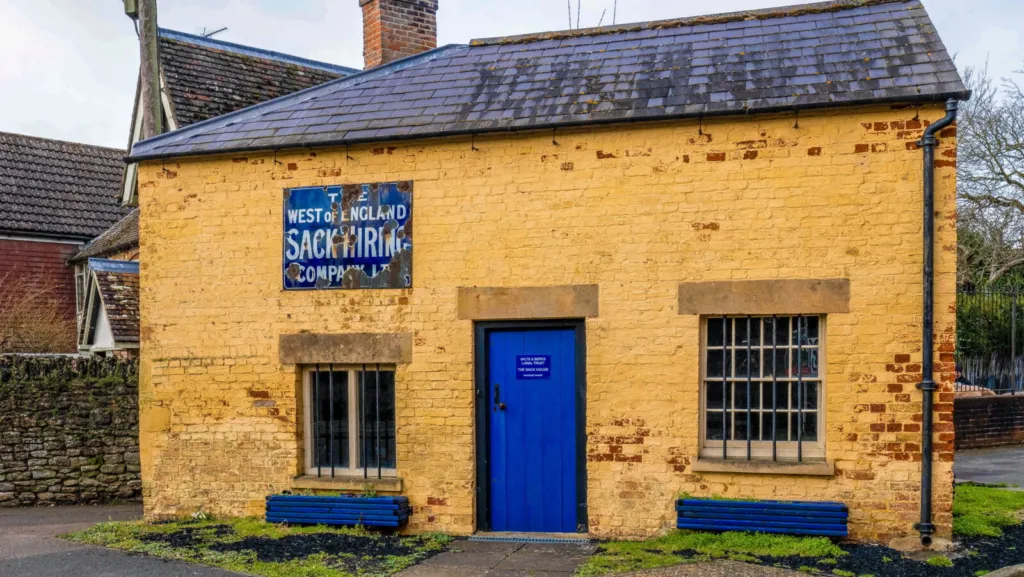
In 1597 twelve governors were appointed to manage lands given for the town’s benefit, funding the grammar school, poor relief and roads. Cloth-making was declining by the 17th century. In the 18th century Wantage had hemp and sacking works, tallow chandlers and several tanneries; the knuckle-bone paving at the Stiles almshouses, founded in 1680 by Robert Stiles, an Amsterdam merchant, recalls the tanning trade. By the early 19th century the town had a poor reputation and is often said to have been called “Black Wantage”.
Canal, railway and tramway
A short arm of the Wilts and Berks Canal reached the town from Grove by 1810, and the Great Western Railway opened a station at Wantage Road, two miles to the north, in the 1840s. The Wantage Tramway linked the town with the station from 1875 and was among the first British tramways to use steam. It carried passengers until 1925 and goods until 1945.
The Victorian town
William John Butler, vicar from 1846 to 1880, founded the Community of St Mary the Virgin, an Anglican order of nuns, in 1848 (some accounts say 1850); its convent and schools became a large part of the town. The grammar school was refounded in 1850 as King Alfred’s School in new buildings by G. E. Street, who also restored the parish church in 1857. William Butterfield lengthened the nave in 1877. In the same year the statue of Alfred, the gift of Colonel Robert Loyd-Lindsay VC, later Lord Wantage, was unveiled by the Prince and Princess of Wales. Improvement commissioners, appointed in 1828, bought the manor in 1868 and gave way to an urban district council in 1894.
The 20th century and after
Wantage grew after the Second World War, helped by jobs at the Atomic Energy Research Establishment at Harwell. John Betjeman lived in the town from 1951 to 1972. In 1974 it moved from Berkshire to Oxfordshire, and since 2015 the Kingsgrove development has added a new neighbourhood to the north-east.
Things to see
- The statue of King Alfred in the Market Place (1877, Grade II).
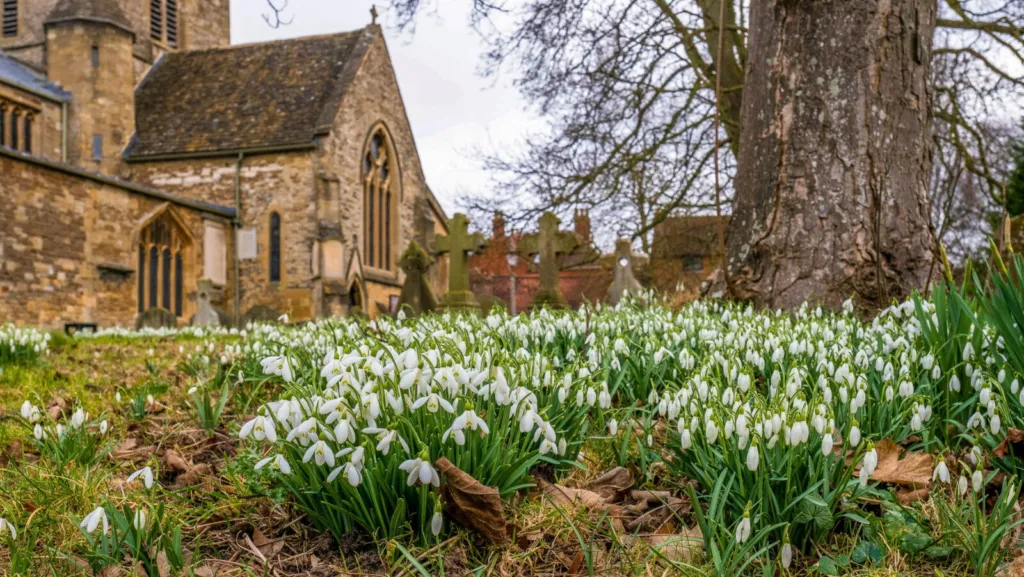
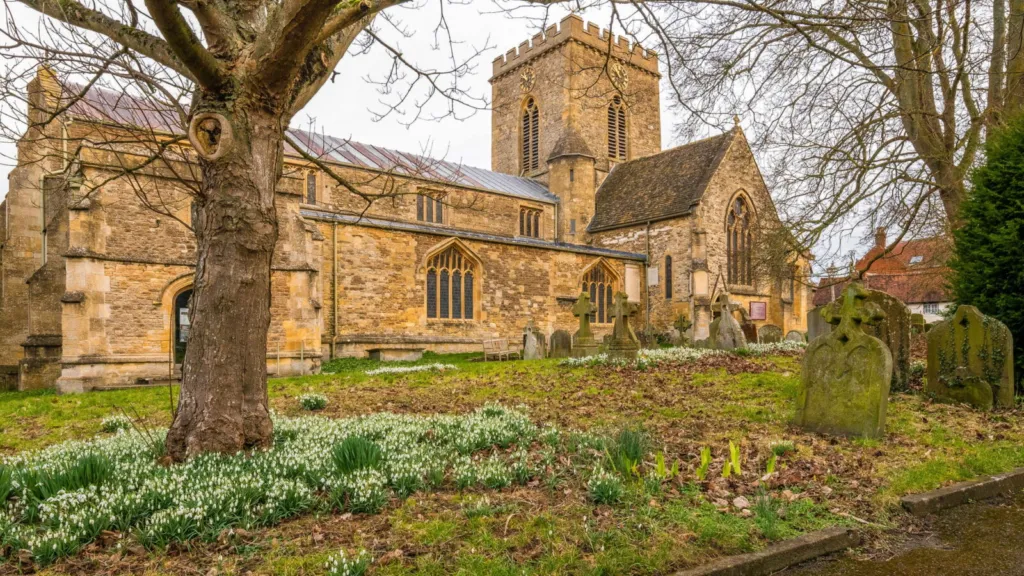
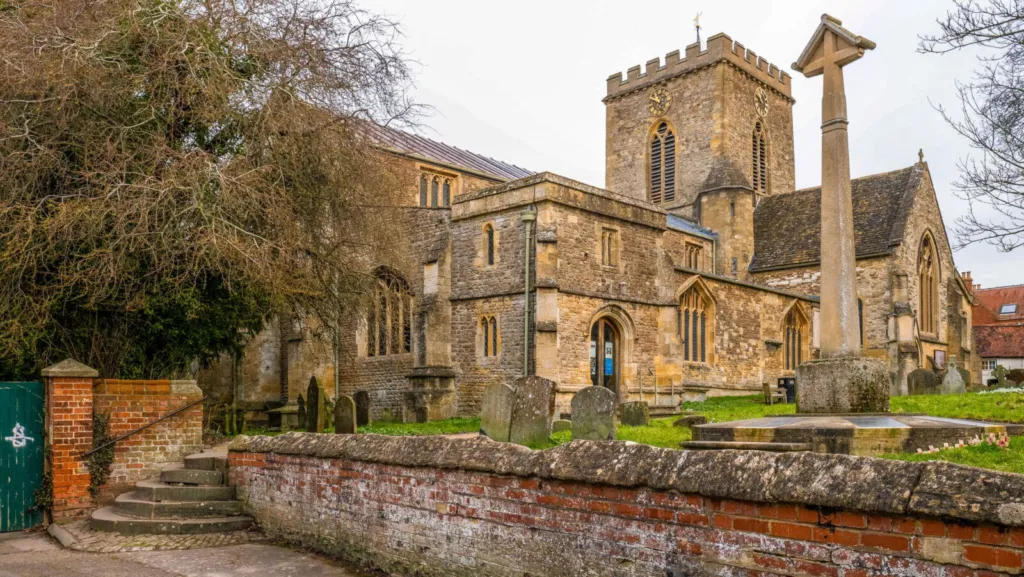
- The church of St Peter and St Paul (Grade I), with its 13th-century crossing tower, 14th-century choir stalls and Fitz Warin effigies.
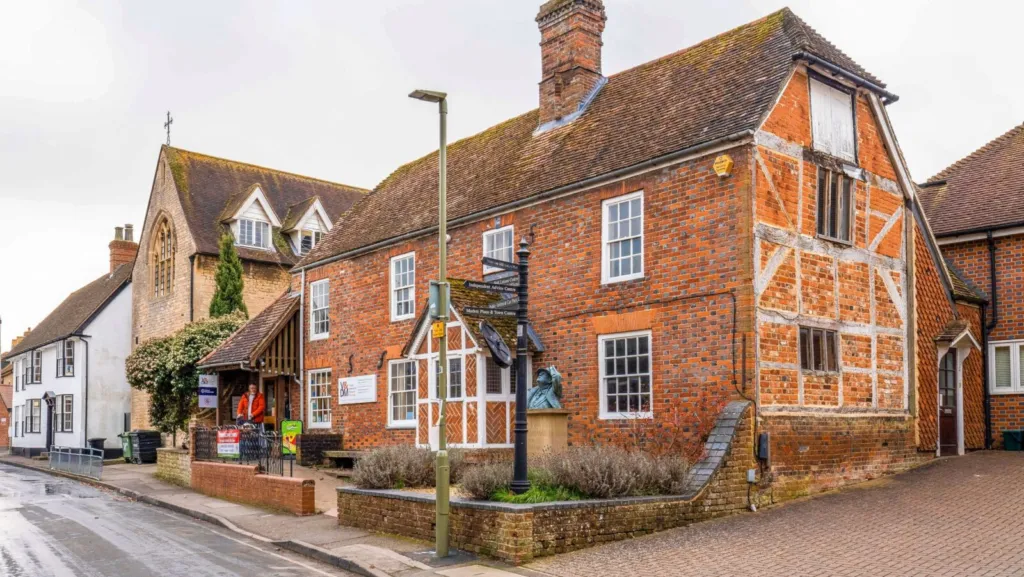
- The Vale and Downland Museum in Church Street, in a listed 17th-century house.
- The Stiles almshouses in Newbury Street (1680), with their knuckle-bone paved courtyard.
- King Alfred’s School buildings on Portway by G. E. Street (1850), with a reset Norman doorway.
- Betjeman Millennium Park and the Letcombe Brook path.
- The Ridgeway National Trail, about two miles south, with Segsbury Camp hillfort above Letcombe Regis.
Wantage in pictures



Walks from Wantage

Wantage town and the Letcombe Brook
A short, level loop from the Market Place that follows the town's chalk stream past old mills, Betjeman Millennium Park and Willow Walk nature reserve.

The Wantage Arm and the Wilts & Berks Canal
A mostly level loop that follows the line of the old canal branch out of town to the restored main line, Grove Top Lock and East Challow.

Childrey and the Challows from Wantage
A low-level walk from Wantage along old lanes to the spring-line village of Childrey, returning past West Challow church and along the Wilts & Berks Canal.

Segsbury Camp and the Wantage Monument
A classic downland circuit from Letcombe Regis through an Iron Age hillfort and along the Ridgeway to Lord Wantage's memorial cross, returning past the racehorse gallops.

The Ridgeway from White Horse Hill to Wantage
A one-way walk home along the Ridgeway from the White Horse, past Hackpen Hill and Segsbury Camp, then down through Letcombe Regis into Wantage.

The Ridgeway from Wantage to Goring and Streatley
A long one-way day on the Ridgeway National Trail from Court Hill above Wantage east across the open downs to the Thames at Streatley, finishing at Goring station.
Guides to Wantage
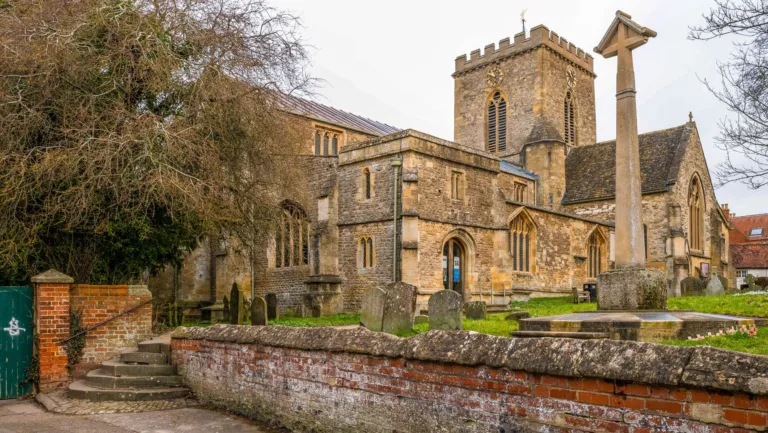
Is Wantage a nice place to live? Moving to Wantage and Grove
This page is for anyone weighing up a move to Wantage or Grove, and for residents who get asked what the town…

The Ridgeway near Wantage: walks, parking and the Wantage Monument
If you want to get up onto the Ridgeway near Wantage, this page sets out where the trail runs, which mapped walks…
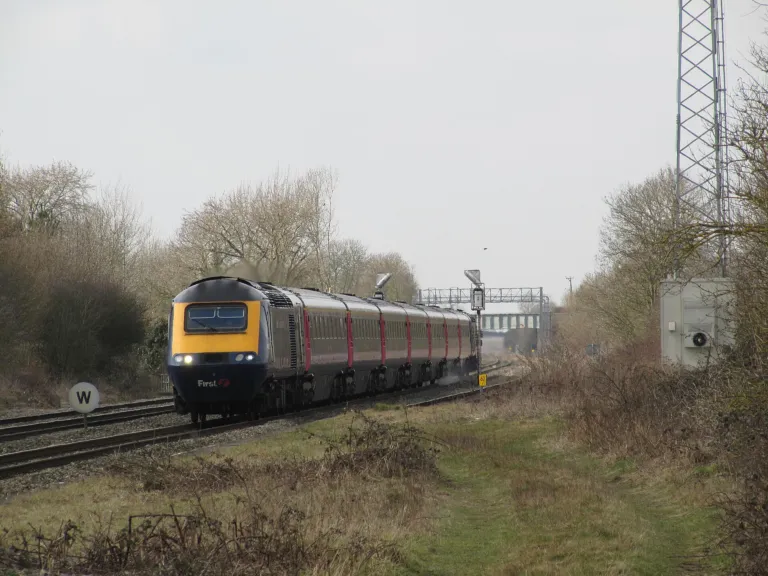
Wantage to Didcot bus routes, trains and commuting
Wantage and Grove have no railway station, so almost every train journey starts with a bus, a bike or a car. This…

King Alfred statue in Wantage: the story and a town walk
The King Alfred statue in Wantage stands in the middle of Market Place, the open square at the centre of town. This…
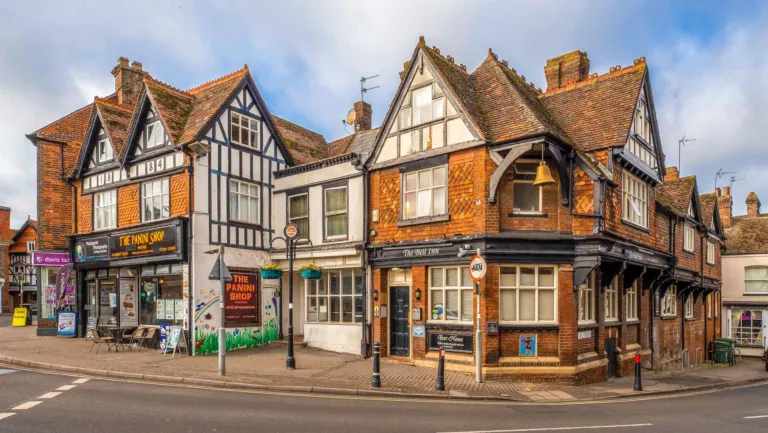
Pubs in Wantage, Grove and the nearby villages
This guide is for anyone working out where to go for a drink or a pub meal in Wantage, Grove or the…

Pub walks near Wantage: short loops and Ridgeway days
This page is for anyone who wants a walk that finishes within reach of a pub. The pub walks near Wantage fall…
New developments in Wantage

- 1 Grove Airfield (Wellington Gate), Grove
- 2 King Alfred Way (Wantage Eastern Link Road)
- 3 Kingsgrove (Crab Hill), north-east Wantage
- 4 South and Vale Joint Local Plan 2041 (and 2045 plan)
- 5 Stockham Farm housing, west Wantage
- 6 Wantage and Grove railway station (proposed)
- 7 Wantage and Grove walking and cycling plan (LCWIP)
- 8 Wantage Community Hospital ground-floor refurbishment
- 9 Wantage Leisure Centre upgrade
- 10 Wantage Market Place improvements
- 11 Wantage Neighbourhood Plan 2023 to 2031
Grove Airfield (Wellington Gate), Grove
Up to 2,500 homes on the former RAF Grove airfield, marketed as Wellington Gate, with schools, a local centre and parks; about a third built so far.
King Alfred Way (Wantage Eastern Link Road)
New 40mph link road between the A417 east of Wantage and the A338 north of the town, opened in December 2024 through the Kingsgrove estate.
Kingsgrove (Crab Hill), north-east Wantage
New neighbourhood of about 1,534 homes on the Crab Hill site, with a primary school, local centre, woodland and a community hub under construction.
South and Vale Joint Local Plan 2041 (and 2045 plan)
The new joint local plan for South Oxfordshire and the Vale, still under examination in 2026; it keeps Wantage and Grove's big sites and a station.
Stockham Farm housing, west Wantage
Three linked housing schemes totalling 380 homes on former Stockham Farm land off Denchworth Road, now complete.
Wantage and Grove railway station (proposed)
Long-running plan to reopen a station for Wantage and Grove on the Great Western Main Line; land is safeguarded but no funding is committed.
People & places of Wantage

The Ridgeway and the Icknield Way
The ancient trackway along the crest of the downs above Wantage, now a National Trail, and the lower Icknield Way along the foot of…

King Alfred the Great
The West Saxon king born at the royal estate of Wantage in 849, remembered today by the marble statue in the Market Place.

King Æthelred’s council at Wantage and the Wantage Code
In about 997 King Æthelred's council met at the royal manor of Wantage and issued a law code with an early form of the…

Mills and watercress on the Letcombe Brook
For 900 years the chalk-fed Letcombe Brook turned corn mills from Letcombe Bassett to Wantage, and its clear water grew watercress for London.

Parish Church of SS Peter and Paul, Wantage
Wantage's Grade I parish church: a 13th-century cruciform church with medieval brasses, the Fitzwaryn tomb and a Victorian restoration by Street.

Wantage Market Place and the Bear Hotel
The medieval market square at the centre of Wantage, with the 17th-century Bear Hotel, the old Corn Exchange and a twice-weekly market.

Alice FitzWarin (Alice Whittington)
Daughter of Sir Ivo FitzWarin, lord of a Wantage manor, who married Richard 'Dick' Whittington in 1402.
The Town Lands Act of 1597
An Act of 1597 made twelve governors trustees of Wantage's charity lands, for the poor, the roads and a grammar school; they still exist.

King Alfred’s Academy (the grammar school)
Wantage's secondary school, descended from a Tudor grammar school chartered in 1597 and renamed after King Alfred in 1849.

Vale and Downland Museum, Wantage
Wantage's local museum, in a 17th-century house on Church Street with a barn brought from East Hendred; free galleries on the Vale's history.
Isaac Kimber
Wantage-born Baptist minister, historian and journalist, author of a popular Life of Oliver Cromwell (1724) and editor of The London Magazine.

Joseph Butler, Bishop of Durham
Philosopher and bishop born at The Priory, Wantage, in 1692, author of the Fifteen Sermons and The Analogy of Religion.
Wantage and its villages have more than a thousand years of recorded history. Read it century by century, with the people and places that shaped it.
Explore local history