Ardington & Lockinge Sports Club
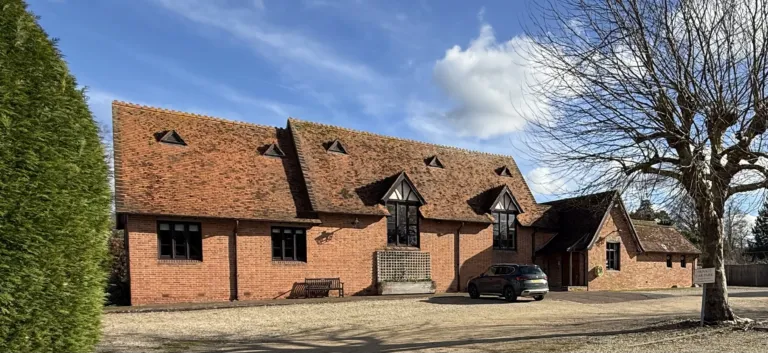
Village sports club with an 8.5-acre field and a pavilion (built 2013) with a bar and function rooms.…
Not yet confirmed

A village about 2 miles (3.5 km) east of Wantage, just south of the A417. It is known for Ardington House, Holy Trinity church and the Victorian estate buildings put up by Lord and Lady Wantage.
For visitors there is a pub, the Boar's Head, The Grocer Chef tea room and stores, Ardington Bakery, the Millennium Stones (two giant sundials in the woods off School Road), and three mapped walks up to the Ridgeway and the Lockinge estate.
33local listings
Village sports club with an 8.5-acre field and a pavilion (built 2013) with a bar and function rooms.…
Join our youth football club and score big on teamwork!
Ardington and Lockinge Parish Council is a joint parish council covering Ardington and the Lockinge villages, near Wantage…
A historic stately home for weddings, private hire, events and filming, open to the public on selected days.
Ardington IT provides local IT support for homes, trades and small businesses in Ardington, near Wantage. Services include…
Craft school running workshops, courses and talks in calligraphy, bookbinding, painting, print, textiles and more
Friendly cricket club founded at the Boar's Head pub in 2005, playing weekday evening 20/20 matches and weekend…
BrandAsylum: Design & Marketing Consultancy across Brand, Digital, Social & Print.
Bringing You the Blooms is a flower delivery service based at The Old Dairy, Home Farm, in Ardington…
A leading provider of agency, professional and consultancy services
Day nursery for children from six weeks to five years, open 7.30am-6pm weekdays all year, with gardens, a…
Clean Slate Catering is an event caterer based at Butchers Yard in Ardington, near Wantage. They offer canapes,…
Effortlessly manage your association and events with Delegant's expert services.
Let Flowers by Kirsty make your day, Oxfordshire-wide delivery available.
Experience personalized fitness with a fun and simple approach!
Holy Trinity is the Anglican parish church of Ardington, near Wantage, and part of the Wantage Downs Benefice.…
Discover your new favorite hair salon in beautiful Ardington.
The Lockinge Estate covers more than 6,000 acres of farmland and woodland at the foot of the Berkshire…
A welcoming venue with multiple hireable spaces in a beautiful village.
Revolutionizing safety through innovative radar solutions - Navtech Radar
OPC Drain Services: Your Solution for Tailored & Professional Drainage.
Oxford Cosmetic Clinic @ Ardington is a doctor-led aesthetics clinic run by Dr Ben Soukup at The Carriage…
Listings are free. Add a local business, club, group or service and we will check it and put it live, usually within a day.
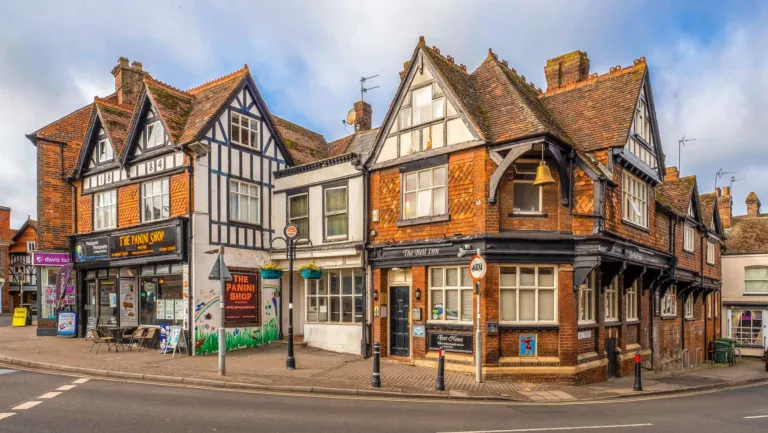
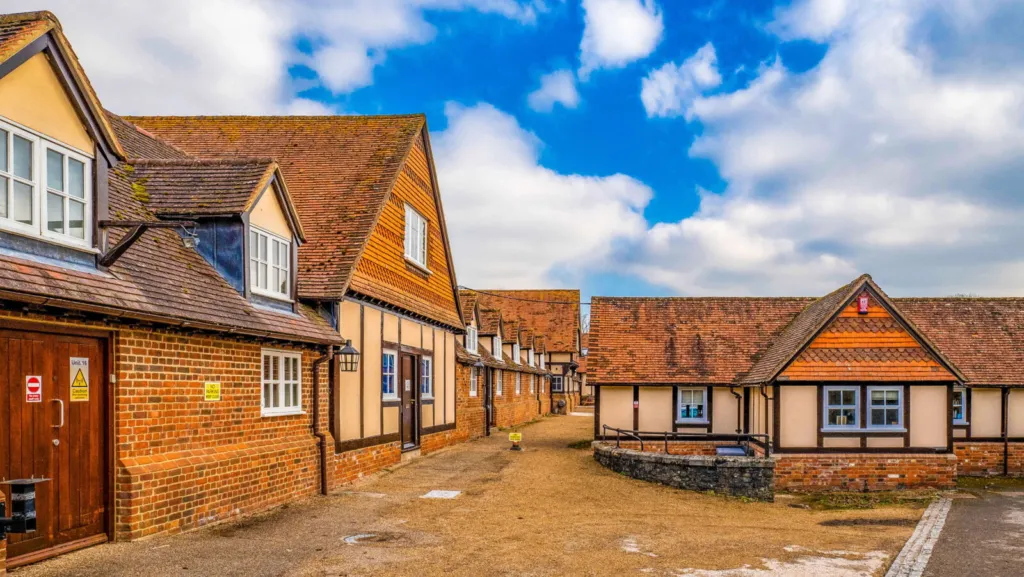
Ardington lies on the spring line where the Downs meet the Vale, a short distance south of the A417 between Wantage and Rowstock. Most of the village belongs to the Lockinge Estate, and much of it was built by the estate in the late 19th century in a recognisable style of red brick and decorative timber framing. At the time of writing the village has a pub, the Boar’s Head; a village shop and tearoom; the Loyd-Lindsay Rooms, used as the village hall and a function venue; a nursery; and the Ardington and Lockinge Sports Club. Ardington House is a private home that opens to visitors on a limited number of days each year and is also a wedding venue.
The parish is long and narrow, running about five miles from the Downs, where the Ridgeway crosses its southern end, to the clay of the Vale. The brook that rises at Lockinge flows through the village past the old mill.
The name, Ardintone in Domesday Book, probably means the farm or estate associated with a man called Earda. Before 1066 the land was held by two free men, Edwin and Saewin. By 1086 both holdings belonged to Robert d’Oilly, the Norman lord of Wallingford, and together they had 24 households, three mills and meadow, worth the considerable sum of £20 a year. The Portway, an old road between Wallingford and Wantage, runs just north of the village.
In the 12th century the manor was held by the Basset family; Gilbert Basset gave the church to his new priory at Bicester around 1182. The manor later passed to great families who seldom lived here: Ralph de Cobham, Mary, Countess of Norfolk, Alice Perrers (Edward III’s mistress), the Holland earls of Huntingdon and dukes of Exeter, and from 1484 the Stanley earls of Derby.
Around 1560 the Earl of Derby leased Ardington to John Clarke, who settled here, and his grandson Edward bought the manor outright in 1606. The Clarkes held it for about two centuries. Edward Clarke built the present Ardington House around 1720, probably to designs by Thomas Strong of Oxford: a grey and red brick house of seven bays with a central pediment. The last of the family, William Nelson Clarke, wrote a history of Wantage hundred, and sold the manor about 1833 to Robert Vernon, a dealer in army horses whose picture collection, the Vernon Gift, went to the nation in 1847. The open fields were enclosed in 1808. In the 19th century the Wilts and Berks Canal and the Great Western Railway were built across the north of the parish.
Around 1860 Colonel Robert Loyd-Lindsay, later Lord Wantage, bought Ardington and made it part of the Lockinge estate. He and Lady Wantage rebuilt much of the village: new cottages, a school, a mill and dairy, the Boar’s Head, and a village shop run as a co-operative on the Rochdale model for estate tenants. Profits from the pub helped pay for a reading room and street lamps. Ardington House was let; since 1939 it has been the home of the Baring family.
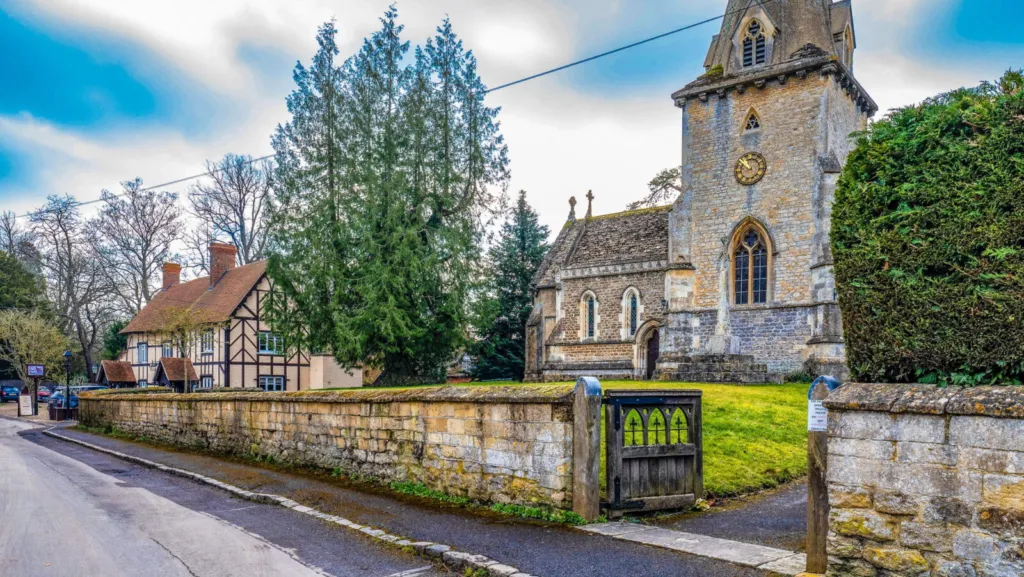
Holy Trinity has a nave, south arcade and chancel arch of about 1200, a north doorway with dog-tooth ornament, and a 13th-century chancel and north tower. In 1856 the tower was refaced and given its stone spire by Joseph Clarke, and in 1887 Somers Clarke lengthened the nave and redecorated the chancel, largely at Lord Wantage’s expense. Inside are a painted Jacobean monument to John Clarke and his wife, a kneeling marble figure of Robert Vernon, a 14th-century font and a Jacobean pulpit. The churchyard has the base and shaft of a medieval cross and a carved memorial of about 1911 to Robert Hamilton Lindsay.
After Lady Wantage’s death in 1920 the estate stayed with the Loyd family. Christopher Loyd, who took it on after the Second World War, converted redundant farm buildings into workshops and offices, which helped keep Ardington a working village rather than a dormitory. Ardington moved from Berkshire to Oxfordshire in 1974.



A gentle, mostly flat loop linking three villages below the downs, with brooks, a medieval chapel museum and the Ardington estate.
A circuit from Ardington through East Lockinge, up to Lord Wantage's monument on the Ridgeway, and back along the Ginge Brook.
A long one-way day on the Ridgeway National Trail from Court Hill above Wantage east across the open downs to the Thames at Streatley, finishing at Goring station.
This is a plain run-through of the villages near Wantage: which direction each one sits in, how far out it is, and…
This page is for anyone who wants a walk that finishes within reach of a pub. The pub walks near Wantage fall…
This page is for anyone planning a day out with a wheelchair, a mobility scooter, a walking frame, or simply less puff…
This guide is for anyone planning a roast on a Sunday: people who have lived in town for years, families who have…
This guide is for anyone who rides from the town: parents after a flat loop with the children, riders who want a…
This guide is for anyone working out where to go for a drink or a pub meal in Wantage, Grove or the…

The science and innovation campus south of Didcot, home to 7,000+ people and 250+ organisations, has 93 hectares allocated for further growth.
New 40mph link road between the A417 east of Wantage and the A338 north of the town, opened in December 2024 through the Kingsgrove estate.
The ancient trackway along the crest of the downs above Wantage, now a National Trail, and the lower Icknield Way along the foot of…
A symmetrical Baroque brick house of 1719–21 built for Edward Clarke, with a celebrated staircase; home of the Baring family since 1939.
The mansion at the heart of the Lockinge Estate, home of Lord and Lady Wantage and their art collection, pulled down in 1947.
Crimean War VC, co-founder of the British Red Cross and builder of the Lockinge estate, who gave Wantage its statue of King Alfred.
Heiress, art collector and benefactor of Lockinge who shaped the estate villages, founded Wantage Hall at Reading and raised the Ridgeway cross.
Ardington and the Lockinges, rebuilt from the 1860s by Lord and Lady Wantage as model estate villages; Lockinge House itself was demolished in 1947.
A tall marble memorial cross on the Ridgeway above Lockinge, put up by Lady Wantage in memory of her husband, Lord Wantage VC (1832–1901).
Wantage GP who rescued old barns and buildings for community use, creating Lains Barn, the Vale and Downland Museum and the Court Hill Centre.
Two giant sundials in the woods at Ardington, made for the millennium by the sundial maker David Harber: a noon mark and a semicircle…
Wantage and its villages have more than a thousand years of recorded history. Read it century by century, with the people and places that shaped it.
Explore local history