

Hanney Bellringers
Hanney Bellringers are the band of bellringers at St James the Great Church in West Hanney, where they…
Not yet confirmed

West Hanney is a small village about 3 miles (5 km) north of Wantage, on the west side of the A338 facing East Hanney. It is known for its Norman church of St James the Great and for the gold and garnet Hanney brooch found here in 2009.
Its pub is the Plough at Hanney, and New Hanney Spice is the village restaurant.
10local listings
Hanney Bellringers are the band of bellringers at St James the Great Church in West Hanney, where they…
Informal book group founded in 2005 that meets monthly at the Plough in West Hanney; books chosen by…
Volunteers who maintain the Nigel Eady Community Woodland and meadow between East and West Hanney (owned by West…
Friendly lunchtime walking group for locals and home workers. Walks of about 50 minutes around the village
Quality accounting advice for individuals and small businesses in Oxfordshire.
Experience grandeur through Moghul cuisine at Hanney Spice restaurant!
St James the Great is the Anglican parish church of West Hanney, near Wantage, and part of the…
Experience award-winning food and hospitality at The Plough Hanney.
Aunt Sally team based at the Plough in West Hanney, playing in the local summer league; newcomers invited…
West Hanney Parish Council is the parish council serving West Hanney, near Wantage in the Vale of White…
Listings are free. Add a local business, club, group or service and we will check it and put it live, usually within a day.
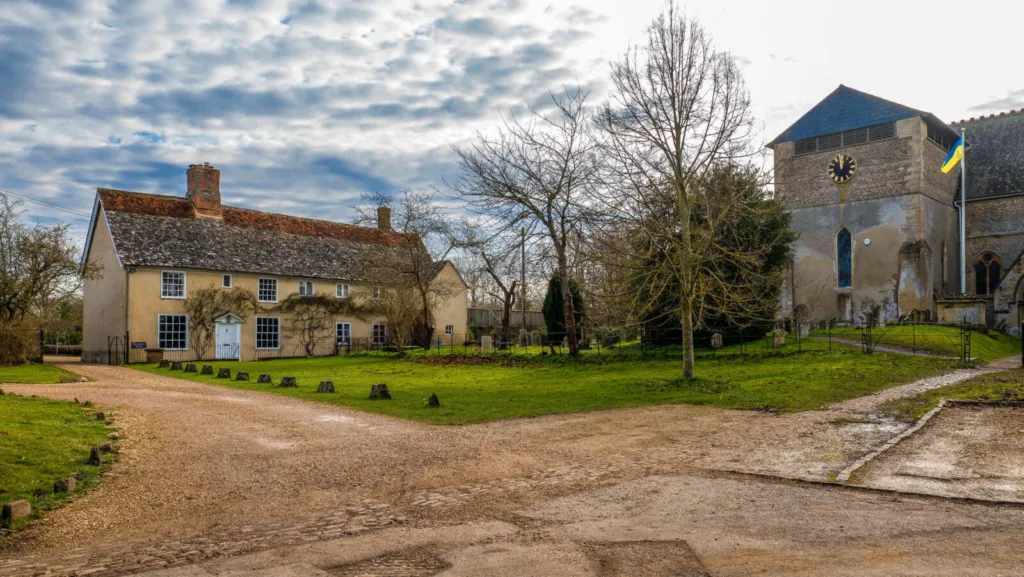
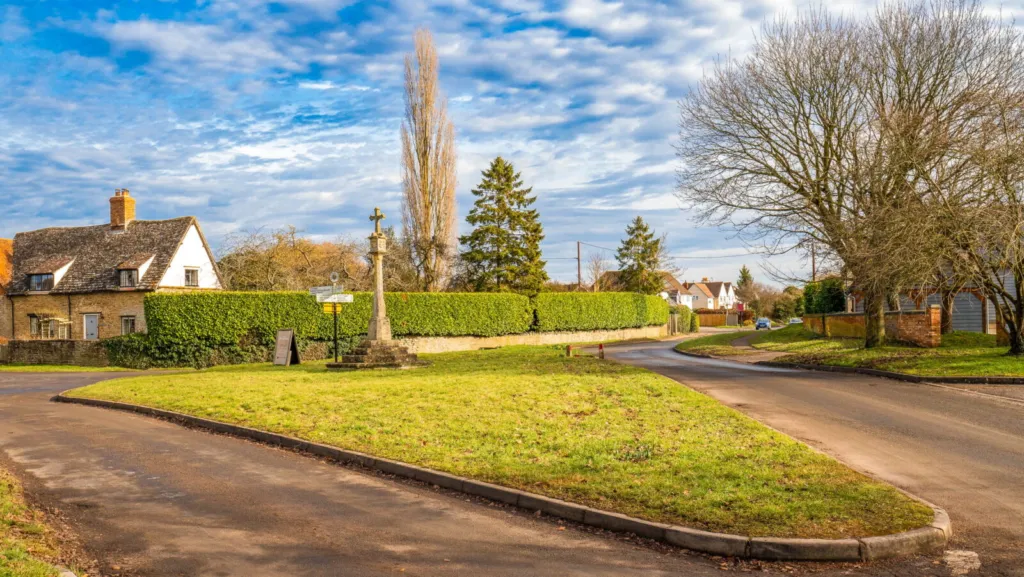
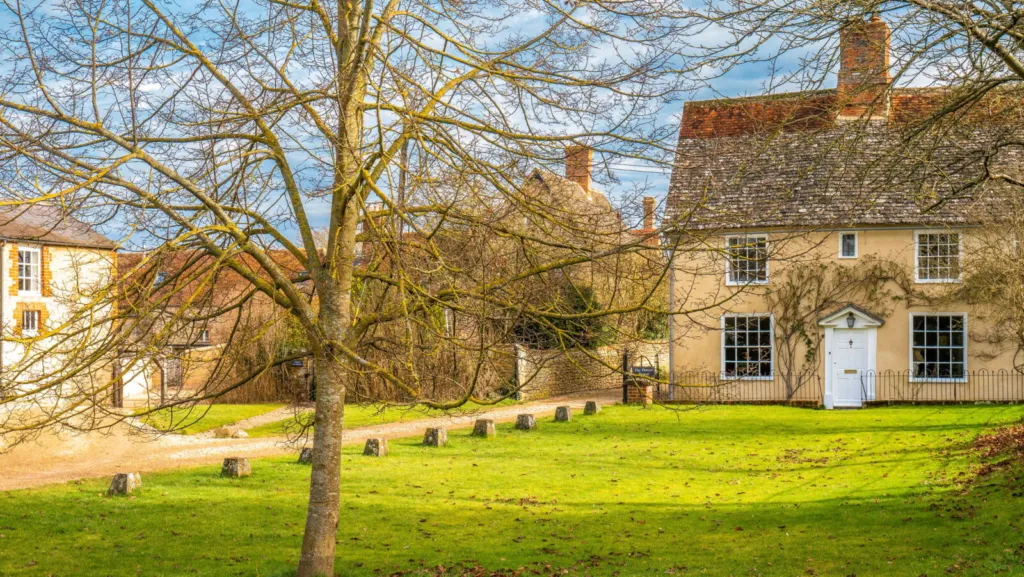
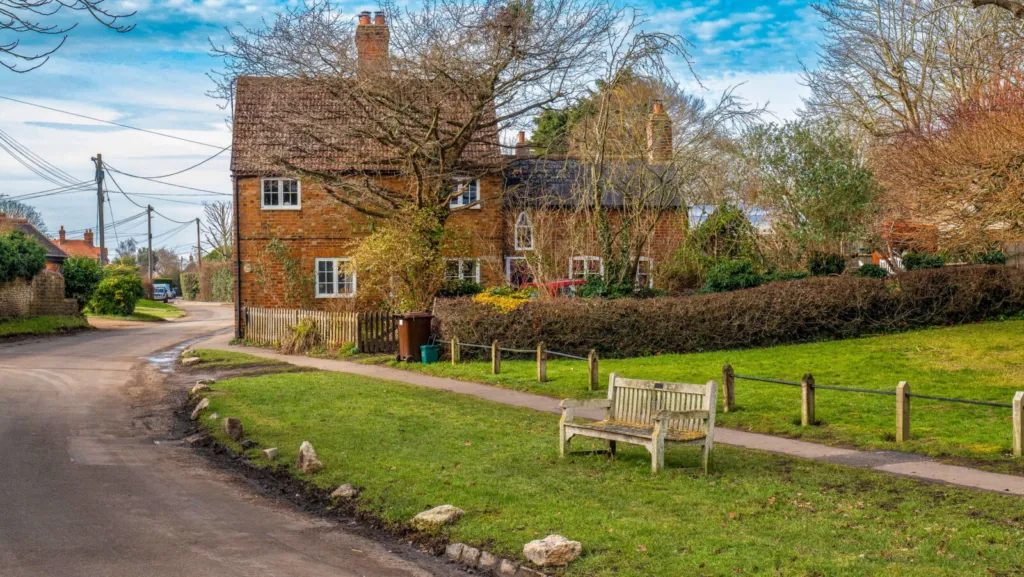
West Hanney sits on low, well-watered ground in the Vale of White Horse, just west of the A338 Wantage to Oxford road. It is the smaller of the two Hanneys by population but historically the senior one: the parish church, the vicarage and the old manor farms are here. The village gathers round a small green with a stone cross, with the church, the Georgian former rectory (now West Hanney House) and the thatched Plough close by.
At the time of writing the Plough, a timber-framed pub bought by villagers in 2015 and run as a community pub, is open, and the former Lamb pub is an Indian restaurant, Hanney Spice. The primary school, the village hall and the community shop are shared with East Hanney. Old raised footpaths, both listed, once kept walkers dry across the wet ground between the villages.
The name Hanney is usually explained as Old English for an island frequented by wild birds. In September 2009 a metal detectorist at a rally in the parish found a gold disc brooch set with garnets. Excavation then uncovered the grave of a young woman buried around the middle of the 7th century with knives, a spindle whorl and pots. Only about twenty brooches of this kind are known, most from Kent and East Anglia, and the Hanney brooch is the westernmost yet found. It has been displayed at the Oxfordshire Museum in Woodstock.
In 1086 West Hanney belonged to Walter Giffard, who held one estate himself and let another to two tenants, Osbern and Theodric. The main estate had been held before the Conquest by Earl Tostig, King Harold’s brother; it had 37 households between the two holdings, two mills and a church, held by Turold the priest. Giffard gave the village to his priory at Newton Longville in Buckinghamshire. When Henry V seized the lands of alien priories the manor passed to the Crown, and in 1441 it was granted to New College, Oxford. The smaller estate became the manors of Seymour’s Court and Andrew’s Court. From 1352 the rectory belonged to the Dean and Chapter of Salisbury, who still held it in 1924.
St James the Great was once dedicated to St Mary; a record of 1252 uses the old name. Some historians think it began as an early minster. The north wall of the nave dates from about 1150 and keeps a Norman doorway with chevron ornament, and the tower was added on the north side late in the same century. The chancel was rebuilt in the 15th century and the church was restored in the 19th. Inside are a late 12th-century font and a notable set of brasses, among them a 14th-century priest and the Ashcombes of Lyford. A memorial records the death of Elizabeth Bowles at the claimed age of 124. Five of the six bells were cast by Abraham Rudhall in 1702.
The Yate family of Lyford kept a dower house north-east of the church; its chimney carries their gate badge. The rectory, a red-brick house of 1724, is now West Hanney House. Hanney’s open fields were enclosed under an Act of 1803. The Lamb closed as a pub in 2008 and reopened as a restaurant in 2011, and the Plough became a community pub in 2015. West Hanney moved from Berkshire to Oxfordshire in 1974.
This is a plain run-through of the villages near Wantage: which direction each one sits in, how far out it is, and…

East Hanney has grown by around 200 homes in recent years, mainly off Steventon Road and at Summertown; one allocated site has not come forward.
Thames Water's proposed 150 billion-litre reservoir between Steventon, East Hanney and Drayton; a planning application is due in late 2026.
West Hanney's Norman church, with a rich 12th-century doorway and a fine run of Tudor brasses, serving the old parish of the Hanneys.
In 2009 a metal detectorist at West Hanney found a gold and garnet brooch in the grave of a young woman buried in the…
Wantage and its villages have more than a thousand years of recorded history. Read it century by century, with the people and places that shaped it.
Explore local history


