Be Yoga
Be Yoga is run by Beth Trotter, who has taught Hatha Yoga locally for 20 years. Classes are…
Not yet confirmed

Letcombe Regis lies on Letcombe Brook at the foot of the Downs, about 1.5 miles (2 km) south-west of Wantage. It was a royal manor at Domesday, and the Iron Age hillfort of Segsbury Camp stands on the ridge above it.
For visitors there is the Greyhound Inn, bed and breakfast at Quince Cottage, the Court Hill Centre up by the Ridgeway, and three mapped walks, including Segsbury Camp and the Wantage Monument.
27local listings
Be Yoga is run by Beth Trotter, who has taught Hatha Yoga locally for 20 years. Classes are…
Country & Home is an online retailer based at The Coach House in Letcombe Regis, near Wantage. It…
Volunteers caring for the Letcombe Valley reserve through monthly work parties
Property developer building homes in Oxfordshire and Berkshire.
Informal village reading group at the Greyhound. Each month it discusses two books
Local charity protecting & enhancing the Letcombe Brook (chalk stream).
Friendly, inclusive village cricket club playing in the Cherwell League, a midweek Downs League and Sunday friendlies.
Village film nights showing recent releases in the village hall, with a pre-film drink and chat
Village men's football club rebuilding with a new squad after joining the bottom division of the Oxfordshire Senior
Letcombe Regis Parish Council is the parish council for the village of Letcombe Regis, near Wantage in the…
Not-for-profit community equestrian facility with an all-weather arena, field and cross-country jumps
A light, spacious village hall on the edge of Letcombe Regis, opened in 2016, with step-free access, free wifi
Members' social club at the village sports pavilion, with darts teams and Pizza at the Pavilion nights
Relaxed village club with two all-weather courts and a hitting wall, offering social sessions
Volunteer group protecting and improving the local environment. It runs illustrated talks, guided walks, wildlife surveys and the…
Friendly gardening club meeting monthly from September to April.
Mel Taylor Dog Training is run by Mel Taylor from Croft End in Letcombe Regis, near Wantage, with…
Capturing your pet's personality through a lens of expertise.
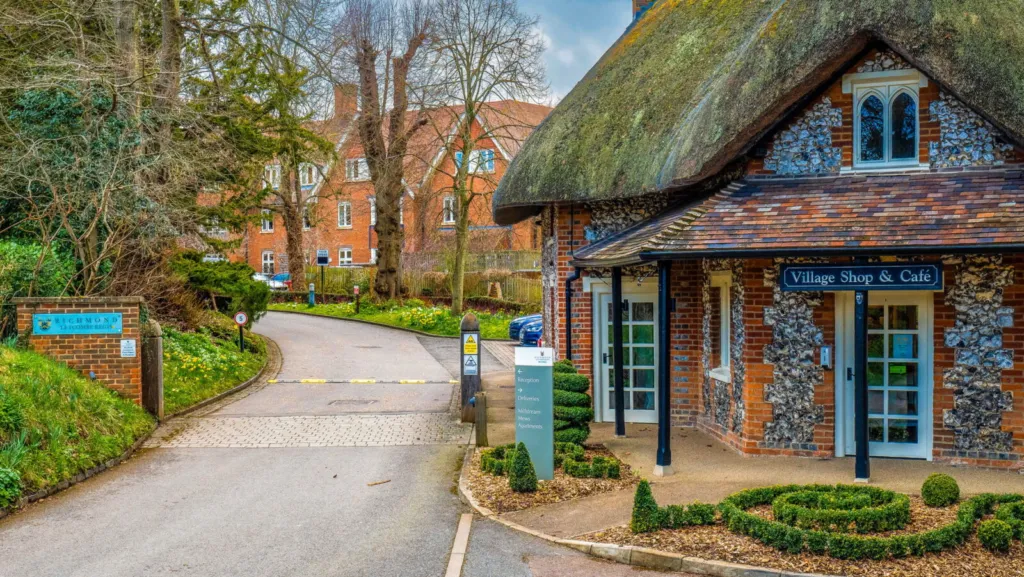
Quince Cottage Bed and Breakfast is a large thatched house in Letcombe Regis, dating from the 17th century…
Spa at the Richmond retirement village, open to visitors for spa days, treatments, hair and nails. It has…
Retirement village with assisted living and an on-site nursing and dementia care home.
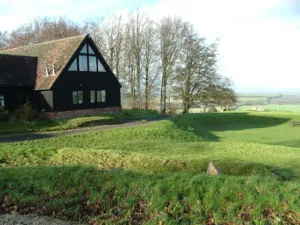
Explore the Thames Valley and Berkshire Downs at Court Hill Centre.
Listings are free. Add a local business, club, group or service and we will check it and put it live, usually within a day.
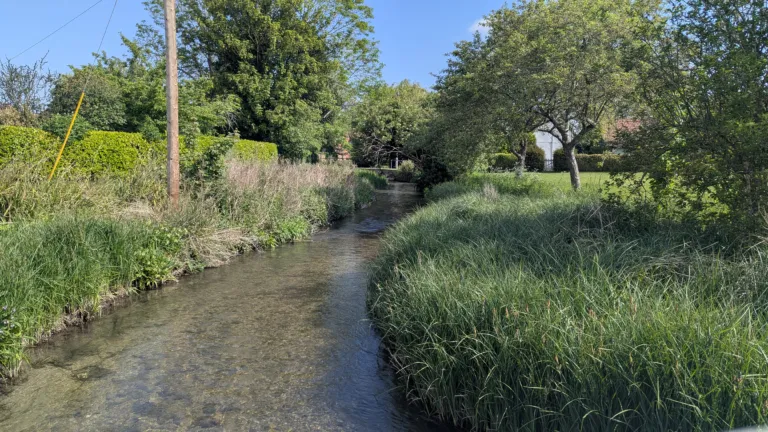
Letcombe Regis is a compact village where Letcombe Brook, one of Oxfordshire’s few chalk streams, comes down from the Downs towards Wantage. The parish climbs south over the ridge and a little way down the far side, and takes in the Iron Age hillfort of Segsbury Camp. Letcombe Valley, a small Berkshire, Buckinghamshire and Oxfordshire Wildlife Trust reserve along the brook, lies at the south end of the village. It was in Berkshire until 1974 and is now in Oxfordshire.
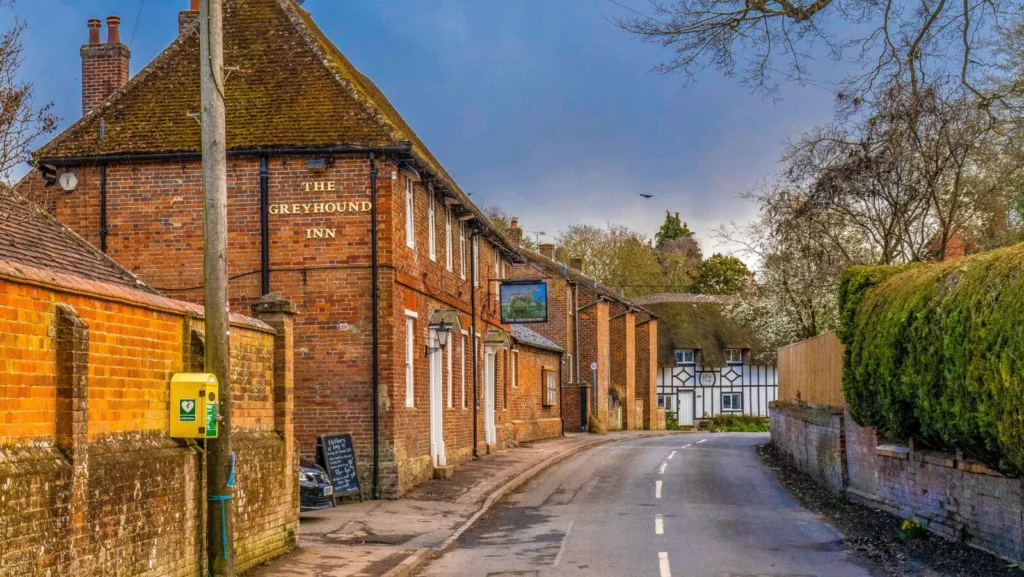
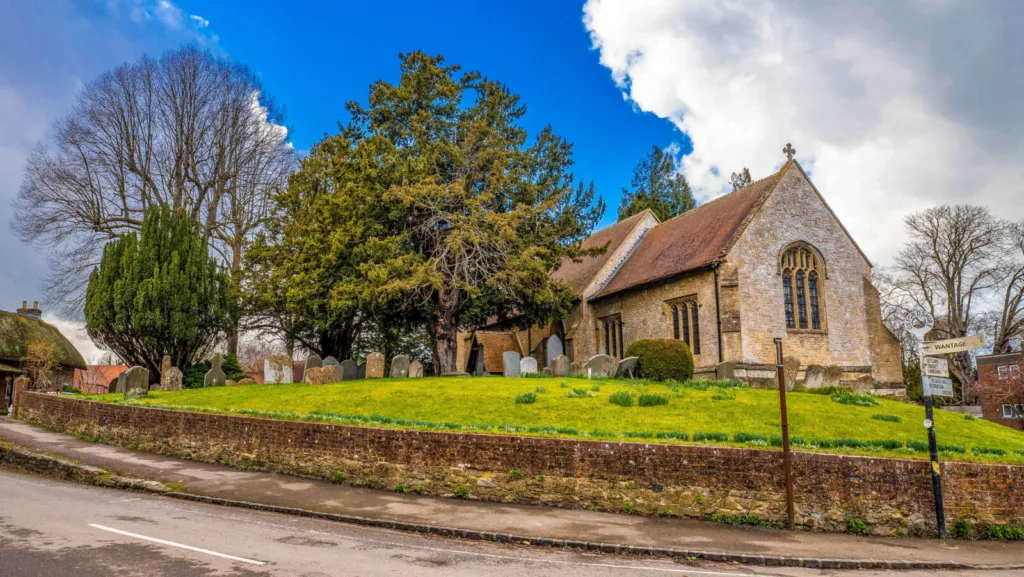
The village has St Andrew’s church, the Greyhound (an 18th-century pub with rooms), a village hall and a football club. There is no school now; the village school merged with Childrey’s in 1998 to form the Ridgeway Church of England Primary School in Childrey. Letcombe Regis is reached by lanes from Wantage and the B4507, and the Ridgeway is a steep walk or ride up from the south end of the village.
Segsbury Camp, also called Letcombe Castle, is a roughly circular hillfort of about 10.7 hectares on the crest of the Downs, just north of the Ridgeway. Excavations by Oxford University in 1996 and 1997 found that it was used on and off between the 6th and 2nd centuries BC, perhaps as a shared meeting place for the farming communities around it rather than a permanent town. British and Roman coins have been found in the parish, and the county history of 1924 records the remains of a Roman villa.
The name comes from Old English and refers to the brook in its combe. ‘Regis’ (of the king) was added because the manor belonged to the Crown: Edward the Confessor held it, and in 1086 King William held it, with 51 households, five mills and a church belonging to the nuns of Amesbury. Letcombe Bassett, further up the valley, took its name from a later family of lords instead. In 1136 King Stephen gave the manor to the great abbey of Cluny in Burgundy, and it passed back and forth between Cluny and the Crown during the wars with France. Under Henry V’s will it went to Westminster Abbey in 1445, and the Dean and Chapter of Westminster kept it until 1869.
The two lower stages of St Andrew’s tower date from about 1195; most of the rest of the church is 15th-century, restored in 1863. Inside are a 12th-century font and fragments of 15th-century glass. In the churchyard stands a monument to George King Hipango, a young Māori chief who died here in 1871, aged nineteen, while staying at the vicarage. Antwicks Manor, once called the Moat House, was bought around 1900 by Richard ‘Boss’ Croker, the former Tammany Hall leader from New York, who filled in its moat and sold it in 1905.
The open fields of Letcombe Regis and the Challows were enclosed under an Act of 1801, with the award made in 1804. In the early 20th century the village had four racing stables and grew watercress in the brook. From 1957 the Agricultural Research Council ran a laboratory at the Letcombe Manor estate, first studying radioactive fallout in food and later plant roots and soils; it closed in 1985, and Dow used the site for crop research for some years after that.

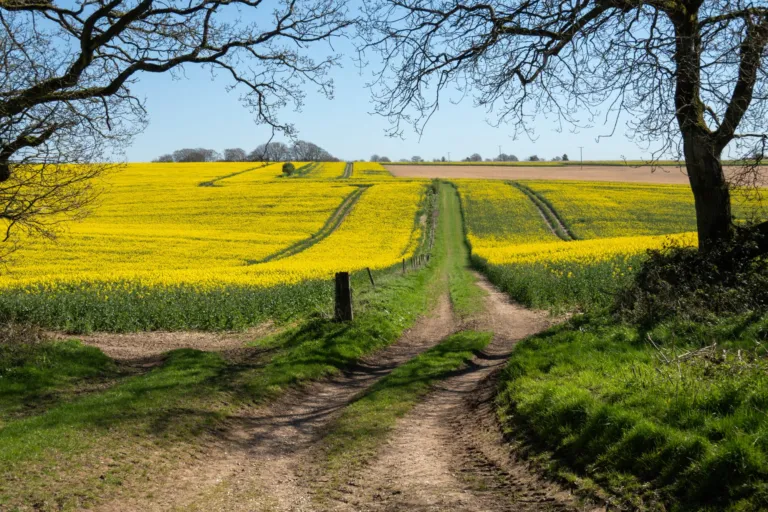
A spring-line village circuit that follows the brook through a wildlife trust reserve to Letcombe Bassett and returns over the fields on old green lanes.
A classic downland circuit from Letcombe Regis through an Iron Age hillfort and along the Ridgeway to Lord Wantage's memorial cross, returning past the racehorse gallops.
A one-way walk home along the Ridgeway from the White Horse, past Hackpen Hill and Segsbury Camp, then down through Letcombe Regis into Wantage.
This guide is for anyone who rides from the town: parents after a flat loop with the children, riders who want a…
This is a plain run-through of the villages near Wantage: which direction each one sits in, how far out it is, and…
This guide is for anyone working out where to go for a drink or a pub meal in Wantage, Grove or the…
A large Iron Age hillfort on the downs above Letcombe Regis, used on and off between the 6th and 2nd centuries BC.
The ancient trackway along the crest of the downs above Wantage, now a National Trail, and the lower Icknield Way along the foot of…
For 900 years the chalk-fed Letcombe Brook turned corn mills from Letcombe Bassett to Wantage, and its clear water grew watercress for London.
Wantage GP who rescued old barns and buildings for community use, creating Lains Barn, the Vale and Downland Museum and the Court Hill Centre.
Archaeologists working ahead of a Thames Water pipeline between Childrey Warren and Wantage found 10,000 years of activity and more than 30 burials.
Wantage and its villages have more than a thousand years of recorded history. Read it century by century, with the people and places that shaped it.
Explore local history