1st Cuckhamsley Scout Group
Scout group for Ardington, Lockinge and the Hendreds, east of Wantage. Beavers, Cubs
Details checked

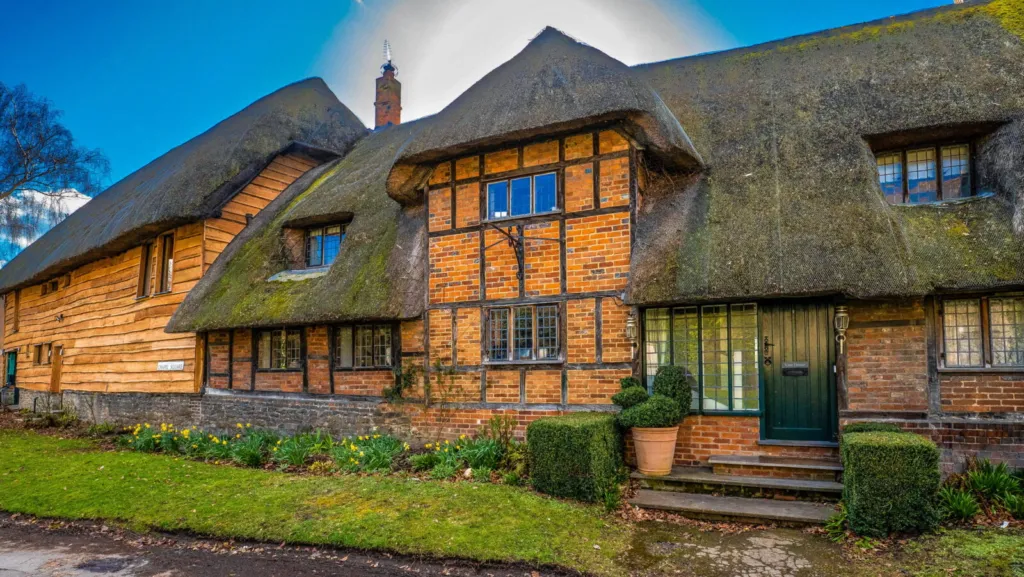
East Hendred sits on the Hendred Brook below the Downs, about 4 miles (6 km) east of Wantage. It is known for its timber-framed and thatched cottages, the 15th-century Champs Chapel and Hendred House, home of the Eyston family since the 15th century.
For visitors there are two pubs, the Eyston Arms and the Wheatsheaf, the Hendred Store and Post Office, the Hendreds Community Cafe, Hendred Vineyard and the Hendred Museum, and three mapped walks head out from here, up to the Ridgeway.
39local listings
Scout group for Ardington, Lockinge and the Hendreds, east of Wantage. Beavers, Cubs
Brookleas Fish Farm is a trout farm on the Ginge Brook, off Reading Road in East Hendred, fed…
Cricket club founded 1862 with three Saturday league teams, T20 sides, a women's team
Village football club founded 1912, with a first team in the Wiltshire Senior League
Board game club meeting on Friday evenings at The Wheatsheaf, with monthly tournaments and drop-in Saturday sessions at…
East Hendred Parish Council is the parish council for East Hendred, near Wantage in the Vale of White…
Monthly lunch or tea club for older residents at Snells Hall.
Pharmacovigilance and drug safety services for pharmaceutical companies.
Volunteer-run village museum in Champs Chapel, run by the East Hendred Heritage Trust, with changing exhibitions on the…
Runs the Mill Lane ground and clubhouse, home to East Hendred AFC, East & West Hendred Cricket Club
Village shop and Post Office on the High Street selling groceries, bread, newspapers and hot drinks to take…
Hendreds Community Cafe is a community cafe at the pavilion on Mill Lane in East Hendred, near Wantage,…
Low-cost community larder, a pay-it-forward Monday café and community growing in the Hendreds.
Village club with two refurbished tennis courts and two pickleball courts, holding Sunday social tennis
Twinning association linking the Hendreds with Sarceaux in Normandy.
Jolly Good Brownies delivers gift wrapped brownies made with quality ingredients
Little Plumber: Trusted quality for the Nuclear Industry and beyond.
Muster Point Campsite is a small, all-grass campsite on Featherbed Lane near East Hendred, close to the Ridgeway…
Unleash your creativity with Oxfordshire Arts' pottery and ceramics courses!
Thatching and re-thatching for period and new homes.
Unleash your business potential with Red 5 Design's creative solutions.
Listings are free. Add a local business, club, group or service and we will check it and put it live, usually within a day.
East Hendred is one of the larger villages east of Wantage, with about 1,400 people at the 2021 Census. It lies on the spring line where the chalk of the Downs meets the greensand, with the Hendred Brook running through it on its way north to the Thames at Sutton Courtenay. The parish is a long strip: from the low ground by the railway in the north, through the village, and up onto the Downs past the Ridgeway, where its south-eastern corner takes in the western edge of Harwell Campus.
The village centre has a large number of timber-framed, brick and thatched houses, and is a conservation area. At the time of writing it has two pubs (the Eyston Arms and the Wheatsheaf), a village shop, Snells Hall (the village hall, in a former school), a sports ground, and two primary schools: the Hendreds Church of England School and St Amand’s Catholic School. There are two churches, the Anglican St Augustine of Canterbury and the Roman Catholic St Mary’s. The village is just south of the A417 between Wantage and Harwell; Didcot Parkway is the nearest station.
The name, recorded as Henret in 1086, is usually explained as Old English for a stream frequented by wild birds, perhaps water-hens. On the parish’s southern boundary by the Ridgeway stands Scutchamer Knob (Cuckhamsley Hill), recorded in 1006 as Cwichelmeshlaew, ‘Cwichelm’s mound’. Historic England treats it as probably a large Bronze Age barrow, later reused; Iron Age pottery was found when it was re-dug in 1934. It was used as a meeting place for the shire, and the Anglo-Saxon Chronicle records a Danish army making for it in 1006. The mound was badly cut about by digging in the 1840s.
Domesday Book records the two Hendreds together, with 72 households under eight holders. East Hendred was later divided among five manors. The King’s Manor passed from the Count of Évreux to Norman monks and then, in the 15th century, to the Carthusian priory of Sheen, which obtained a market and two fairs in 1415; neither lasted. Reading Abbey held the Abbey Manor, Frampton’s Manor belonged to a cell of St Stephen’s, Caen, and New College Manor to the nuns of Littlemore and then to Lord Williams’s school at Thame. The manor of Arches passed from the Turbervilles and the Arches family to John Eyston by marriage in the mid-15th century. The Eystons, a Catholic family who kept their faith after the Reformation, still live at Hendred House.
Brasses in the church to a ‘woolman’ of 1479 and to two merchant brothers point to the late medieval cloth and wool trade. For a time the stewardship of the King’s Manor was one of the nominal offices used by MPs who wished to leave the House of Commons.
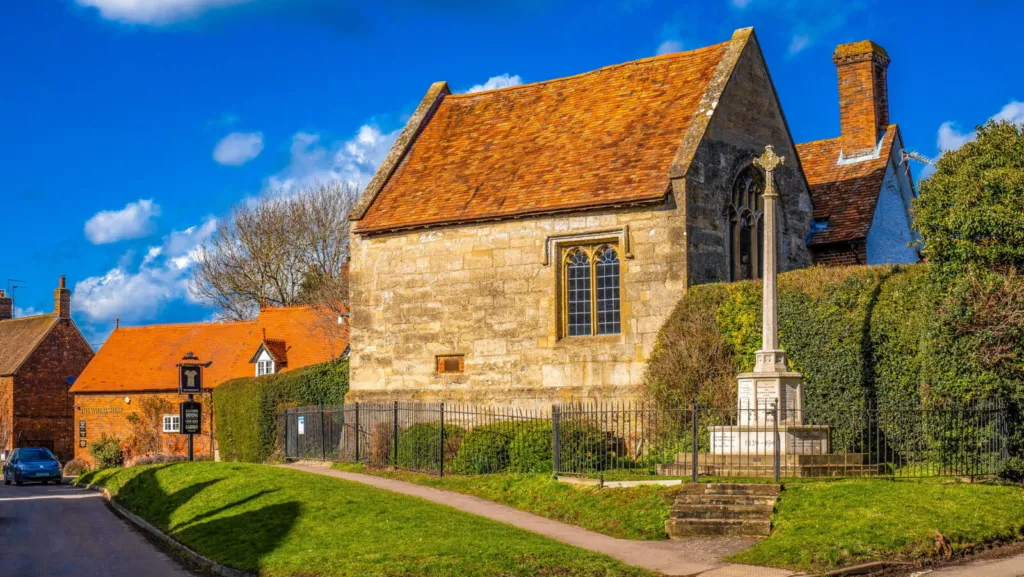
St Augustine’s has nave arcades of the late 12th century with carved capitals, a 14th-century north aisle and transept, and a 15th-century tower and Eyston chapel. Inside are a Jacobean pulpit and a carved medieval lectern. The faceless tower clock carries the inscription ‘John Seymour Wantage 1525’ and still plays a hymn tune through the day. The Chapel of Jesus of Bethlehem on the green was built by the monks of Sheen in the 15th century and later served as a bakehouse and dovecote. Now called Champs Chapel after an 18th-century owning family, it houses the village museum. Hendred House has its own chapel of St Amand, which has 13th-century work; the Catholic church of St Mary followed in 1865.
The western part of the open fields was enclosed under an Act of 1801. The Great Western Railway crossed the north of the parish in 1840, though the village never had a station of its own. In the 20th century the building of RAF Harwell, and after 1946 the atomic research establishment, on the downs brought new residents; the scientist William Penney is among those who lived in the village. The parish moved from Berkshire to Oxfordshire in 1974.




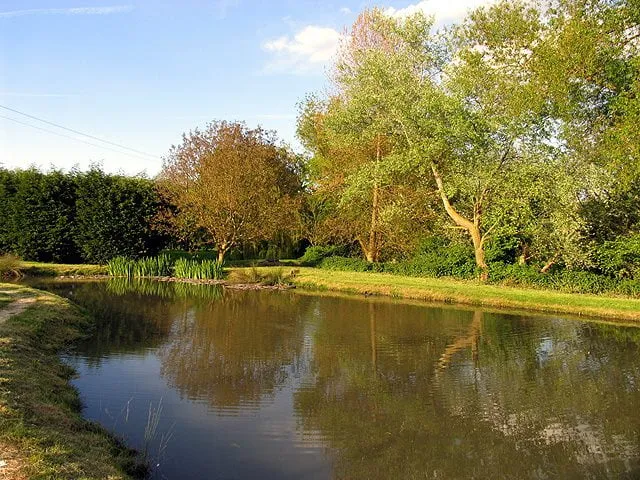
A gentle, mostly flat loop linking three villages below the downs, with brooks, a medieval chapel museum and the Ardington estate.
A climb from a racing village to the Ridgeway, out to an ancient barrow with a Saxon story, and back past the gallops on Bury Down.
A long one-way day on the Ridgeway National Trail from Court Hill above Wantage east across the open downs to the Thames at Streatley, finishing at Goring station.
This is a plain run-through of the villages near Wantage: which direction each one sits in, how far out it is, and…
Deciding where to eat tonight, booking a birthday meal, or stopping for lunch on a day out? This page sets out how…
This page is for parents in Wantage, Grove and the villages who need a school place: a reception place for September, a…
The ancient trackway along the crest of the downs above Wantage, now a National Trail, and the lower Icknield Way along the foot of…
A great prehistoric mound on the Ridgeway above East Hendred, named after Cwichelm, where the shire met and a Danish army halted in 1006.
The medieval manor house of Arches, home of the Catholic Eyston family since the 15th century, with a chapel never used for Protestant worship.
A 15th-century chapel built by the Carthusian monks of Sheen, with its priest's house, now East Hendred's village museum.
Wantage's local museum, in a 17th-century house on Church Street with a barn brought from East Hendred; free galleries on the Vale's history.
The wartime airfield on the downs that became Britain's atomic research centre in 1946 and is now a science campus of more than 200…
Wantage and its villages have more than a thousand years of recorded history. Read it century by century, with the people and places that shaped it.
Explore local history