
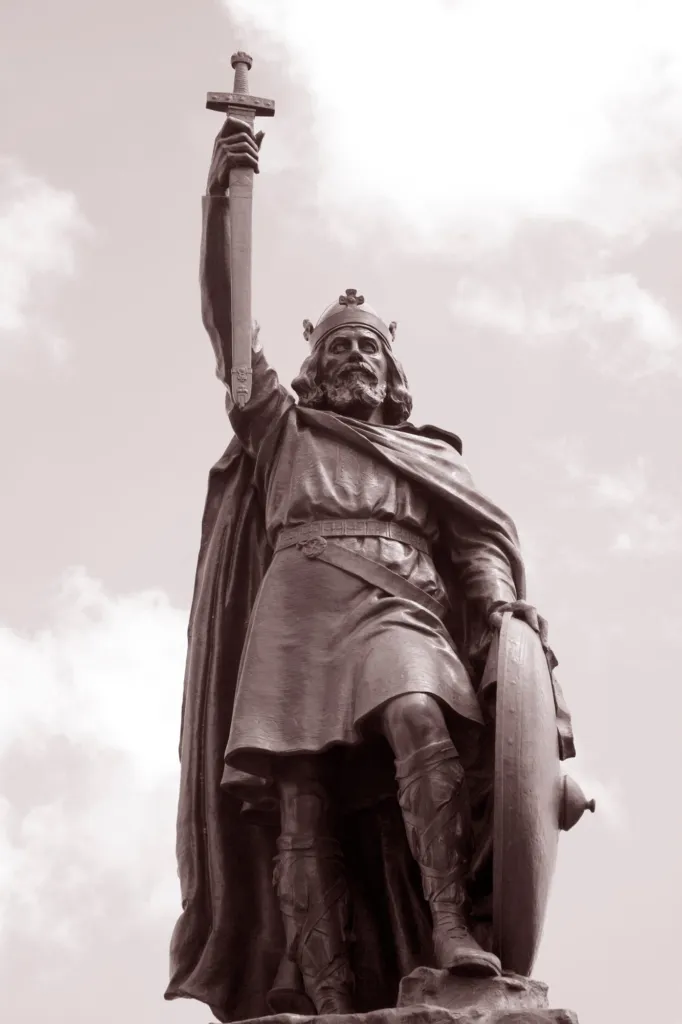
The King Alfred statue in Wantage stands in the middle of Market Place, the open square at the centre of town. This page is for anyone coming to look at it, and for residents who want the story straight. You will find out where it is and what you are looking at, who gave it and who carved it, what the oldest written account says about Alfred being born here, and how to spend an hour in town starting at the plinth.
The short version
- The statue stands in Wantage Market Place, outdoors, in a public square.
- It is marble, sculpted by Count Gleichen, and was unveiled on 14 July 1877 by the Prince and Princess of Wales.
- It was a gift to the town from Colonel Sir Robert Loyd-Lindsay VC, later Lord Wantage.
- The earliest life of Alfred names Wantage as his birthplace in 849, but nobody can point to the spot.
- From the square you can walk the town and brook route, 1.8 miles (2.9 km) and easy, or head south for the Downs.
Where to find the King Alfred statue in Wantage
Market Place is the square at the heart of the town, and the statue is in the middle of it. Walk in from any direction and you will see it, because the figure sits on a tall plinth above the level of the paving. Shops, pubs and cafes face the square on most sides, so this is also where people stop, sit and meet.

Alfred is carved in white marble. He holds an axe in one hand and a scroll in the other, the fighter and the scholar in one figure, which is how Victorian Britain liked to remember him. The plinth carries an inscription recording who gave the statue and who unveiled it, so it is worth walking right round the base rather than taking one photograph and moving on.
There is nothing to book and nothing to pay. It is a street monument in a working market square, open at any hour, in any weather. For how the town fits together and what else sits within a few minutes’ walk, see the Wantage town page.
Was King Alfred born in Wantage?
The claim is old and it is the reason the statue is here. The earliest account of Alfred’s life, written in the 890s by Asser, a monk who worked in the king’s household, says Alfred was born at the royal estate of Wantage in 849. That single line is the basis of everything the town says about him.
What the record does not give is a spot. No royal hall or palace survives above ground, and nothing in the town centre can be tied to a ninth century estate. So the honest answer is that Wantage has the oldest written claim to Alfred’s birth, and no building to attach it to. Historians treat Asser as useful evidence rather than proof.
One detail trips people up. Asser places Wantage in Berkshire, and that was right until 1974, when the Vale of White Horse moved into Oxfordshire. Same town, different county line.
 King Alfred the GreatThe West Saxon king born at the royal estate of Wantage in 849, remembered today by…
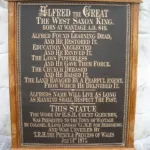 The unveiling of King Alfred’s statue, 1877On 14 July 1877 the Prince and Princess of Wales unveiled Count Gleichen's marble statue of…
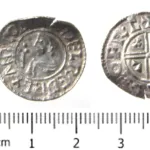 King Æthelred’s council at Wantage and the Wantage CodeIn about 997 King Æthelred's council met at the royal manor of Wantage and issued a…
Who gave the statue and who carved it
The statue was presented to the town by Colonel Sir Robert Loyd-Lindsay VC, who later became Lord Wantage. The sculptor was Count Gleichen. The Prince and Princess of Wales unveiled it on 14 July 1877, which made it a day out for the whole area as well as a gift to the square.
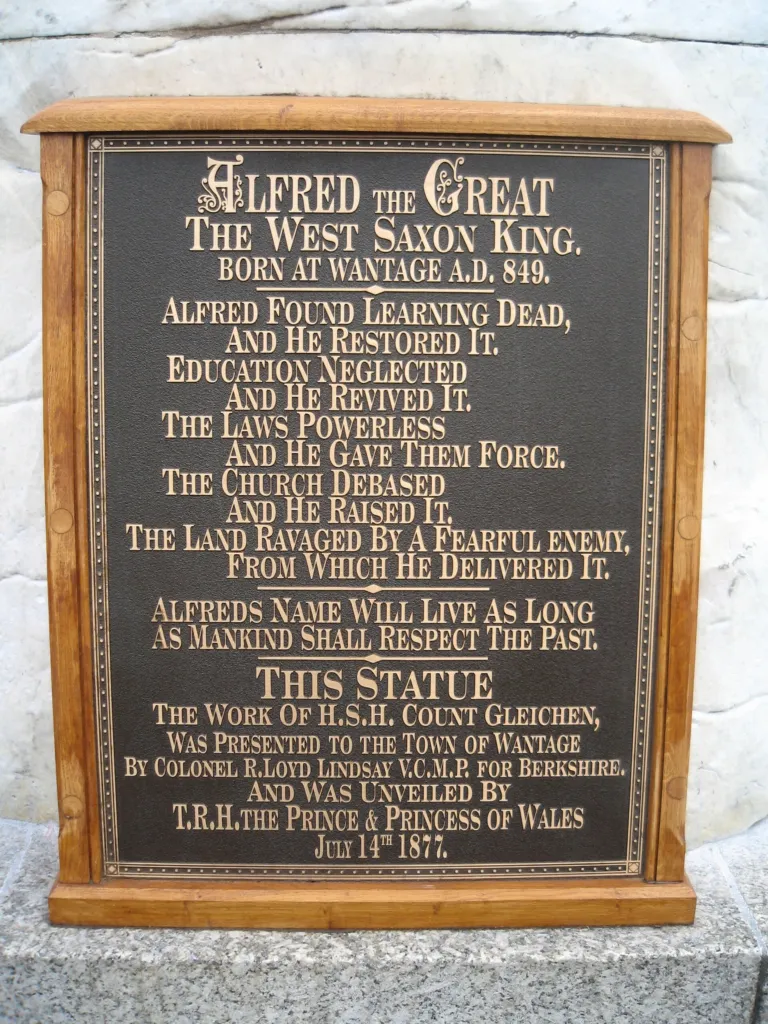
The monument is on the National Heritage List for England. The Historic England list entry records the gift and the 1877 unveiling, and Wantage Town Council keeps its own page about it. Both are good places to check a date before you repeat it.
Alfred and the Wantage Statue
- 849Asser records Alfred born at Wantage royal estate
- 871Alfred becomes king of Wessex
- 878Alfred defeats Danish army at Edington
- 899Alfred dies, buried at Winchester
- 14 Jul 1877Marble statue unveiled in Market Place by Prince and Princess of Wales
- 1974Wantage moves from Berkshire into Oxfordshire
A short timeline of Alfred and his statue
- 849: Asser’s life of Alfred gives Wantage as his birthplace.
- 871: Alfred becomes king of Wessex.
- 878: Alfred defeats the Danish army at Edington and the war turns his way.
- 899: Alfred dies and is buried at Winchester.
- 14 July 1877: the marble statue is unveiled in Market Place by the Prince and Princess of Wales.
- 1974: Wantage moves from Berkshire into Oxfordshire.
An hour in town starting at the plinth
If you have come in for a look and want to make a morning of it, this order works well on foot and keeps you in the centre.
- Start at the statue and walk round the base, reading the inscription on the plinth.
- Do a slow circuit of the square, looking up at the first floor frontages rather than the shop signs.
- Pick up the brook: the mapped town and Letcombe Brook walk is 1.8 miles (2.9 km), graded easy, and starts in town.
- Finish with coffee and something to eat near the square.
Tip: the brook route is flat, so it suits pushchairs and shorter legs far better than the climbs up on the Downs.
For somewhere to sit down afterwards, the directory list of cafes in the area is the page to open; these are the ones in town.
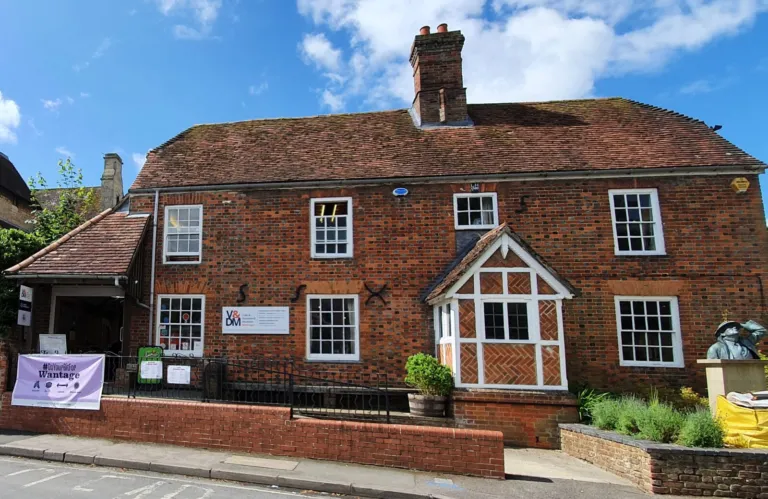

Markets and events around the square
Market Place is not just a setting for the statue; it is where a lot of town life happens. Markets, stalls, fundraising days, guided walks and seasonal events all use the square, and the statue tends to end up as the meeting point because everyone can find it.
Dates move about through the year, so it is better to check a live list than to plan around a fixed day. The next dates in and around town are on the What’s on listings.
What is planned for Market Place
Plans for the square itself are worth knowing about if you are coming for the statue. A town centre scheme for Wantage Market Place improvements was in planning at the last check, in September 2026, and that page carries the current status and dates.
It matters in a practical way. Work in or around the square can change where you can walk, where you can park and whether a market or event runs as usual, so a quick look before a special trip saves a wasted journey.
What Wantage is known for, besides the statue
Alfred comes first, and his name is spread across the town. The secondary school is King Alfred’s Academy, and the eastern link road is called King Alfred Way; the King Alfred Way page recorded it as complete at the last check, in December 2024. People still call the place King Alfred’s town, and that is why you see the name on signs, clubs and school gates.
Beyond Alfred, three things define the area. The chalk escarpment of the Downs rises behind the town, with the Ridgeway running along the top. The Letcombe Brook threads through the middle of Wantage and out towards Grove. And the old Wantage Arm of the Wilts and Berks Canal still shapes the land to the north, which you can follow on a href=”https://wantage.com/walks/wantage-canal-grove-top-lock/”>the Wantage Arm canal walk, 4.2 miles (6.8 km) and easy, from East Challow.
Good to know: for school pages, inspection grades and the month each was last checked, use the schools and nurseries section rather than word of mouth.
Wantage, Winchester and Alfred’s grave
Wantage is not the only town with an Alfred. Winchester has a large bronze statue of him, put up in the city most closely tied to his reign and his burial. The two monuments tell different halves of the same story: Wantage claims the birth, Winchester the kingship and the grave.
As for his remains, nothing has been confirmed. Alfred was buried at Winchester, and his bones were later moved to Hyde Abbey on the edge of the city. The abbey was destroyed after the Dissolution and the ground was dug over and built on, so the grave was lost. Bones recovered from the site at different times have never been proved to be his.
Walks out from King Alfred’s town
The statue makes a sensible start or finish for a walking day, because the square is the easiest place in town to meet. From there the routes fan out south to the chalk and east along the spring line.
For contrast, compare three: the Ridgeway from White Horse Hill to Wantage is 9.7 miles (15.6 km) and challenging; Segsbury Camp and the Wantage Monument is 8.5 miles (13.7 km) and moderate from Letcombe Bassett; and the short loop at White Horse Hill, Uffington Castle and Dragon Hill is 1.7 miles (2.7 km) from Uffington, about 9.5 km west of the Market Place.
- White Horse Hill, Uffington Castle and Dragon Hill 1.7 miles · Moderate
- Wantage town and the Letcombe Brook 1.8 miles · Easy
- Letcombe Brook, Letcombe Bassett and Green Road 3.6 miles · Moderate
- The Wantage Arm and the Wilts & Berks Canal 4.2 miles · Easy
Check before you go, and where to look next
The King Alfred statue in Wantage needs no planning at all: it is outdoors, in the open, and it is not going anywhere. Everything around it does change, so check opening patterns with a business before you travel, and check event dates on the listings rather than on a poster you saw last month.
If the history has caught your interest, the local history section goes further into the town, its places and the people in them, and the other local guides cover eating out, days out and the new estates. This site is an independent local guide, and every page invites corrections if you spot a detail that has moved on.


