This page is for anyone who has just moved to the area, taken on a puppy, or realised they have no idea who to ring at 11pm with a poorly cat. It explains how to find vets in Wantage and Grove, how to register a pet, what routine care covers and how out of hours cover works. It also covers groomers, dog walkers and the few legal bits that come with owning an animal in England.
Anything that changes, such as opening patterns or which practices are taking new clients, is best checked with a quick phone call. The lists on this page update as directory entries change.
The short version
- Start with the veterinary practices listed for the town, then ring to check they are registering new pets from your postcode.
- Routine care usually means vaccinations and boosters, microchipping, neutering, flea and worm treatment and dental checks.
- There is no national price list, so fees differ between practices; ask for theirs before you book.
- Out of hours cover is arranged by your own practice, so save its main number and know where the emergency site is.
- Horses, sheep and poultry need a practice with a farm or equine service, which may not be the one that sees your cat.
Vets in Wantage and Grove: where to start
Most people pick a practice on practical grounds: how far it is with a cat basket on the back seat, whether you can park close to the door, and how the journey works at school run time. Wantage sits about 2.1 km south of Grove, so a practice at the north end of town is often the easier trip for Grove and the Hanneys, while the town centre suits people walking in from the older streets.
Ask two questions when you ring round. First, are they taking new clients at the moment. Second, do they run their own consulting hours on Saturdays, because weekend appointments matter if you work away in the week. The list below shows the veterinary practices in the directory, with addresses, contact details and a map on each page.



Entries are checked against each business’s own website and public sources, and every page invites corrections if something has moved or changed. You can also browse the full local business directory if you want to see what else is nearby, such as a pet shop on the same trip.
How to register your pet with a practice
Registering takes one phone call and about ten minutes of admin. Doing it before you need it is far easier than doing it in a crisis, so it is worth sorting in your first week in a new home.
Registering Your Pet With a New Practice
- Ring or email the practice to confirm they accept new clients from your postcode
- Have pet's name, age, breed, microchip number and current medication ready
- Ask your previous practice to transfer the clinical history directly
- Book a first appointment for a weight check and vaccination review
- Update the microchip database, insurer and pet tag with your new address
- Ask about health plans that spread booster and parasite treatment costs across the year
- Ring or email the practice and ask if they are accepting new clients from your postcode.
- Have the details ready: your pet’s name, age, breed, microchip number and any ongoing treatment or medication.
- Ask your previous practice to send the clinical history across; they will usually transfer it directly.
- Book a first appointment so the vet can weigh your pet and check vaccinations are in date.
- Update the microchip database, your insurer and your pet’s tag with your new address.
- Ask what health plans they offer, since these spread the cost of boosters and parasite treatment across the year.
If you have taken on a rescue animal, say so when you book. The practice may want a longer first appointment to go through the history and any behaviour worries.
Routine visits, fees and insurance
There is no set national fee for a vet visit, so the cost of a basic consultation varies from practice to practice and rises for out of hours work. Fees for vets in Wantage are set by each business, not by the NHS or the council, and the published consultation fee usually covers the appointment only. Tests, x-rays, medication and anything that needs an anaesthetic are charged on top.
Before you book, ask for the current fee list and ask what a vaccination appointment includes. It is a fair question and reception staff are used to it.
Good to know: ask whether a quoted price covers the medication as well as the appointment, because that is where most surprises come from.
Insurance is the other decision. Lifetime policies cost more each month but keep paying for long term conditions; annual policies are cheaper and stop after twelve months of a claim. Whichever you choose, check the excess and whether the practice can claim directly from the insurer or expects you to pay and reclaim. Some national animal charities run means tested help for people on certain benefits, and a practice can tell you what applies. Dogs in England must be microchipped with the details kept up to date, and the rules also cover pet cats; the requirements are set out in the microchipping guidance on GOV.UK.
Out of hours, emergencies and who to call
Ring your own practice first, whatever the time. Out of hours cover in the UK is arranged by the practice you are registered with, and its main number or website will tell you where to go and who answers overnight, at weekends and on bank holidays. That site is often in another town, so find out where it is before you need it, and work out the route in daylight.
Save the number in your phone under something you can find while panicking. Keep a carrier by the door, and write down what you have seen: when it started, what your pet has eaten, and anything it may have swallowed.
| What you need | Where to start | Worth checking |
|---|---|---|
| Vaccination or routine check-up | Your registered practice | Whether they consult on Saturdays |
| Illness or injury during surgery hours | Ring your practice first | They may ask you to come straight in |
| Problem overnight or on a bank holiday | Your practice’s main number | Where the out of hours site is and how long the drive takes |
| Clip, trim or nail cut | A groomer | Experience with your breed’s coat |
| Horse, sheep or poultry | A practice with an equine or farm service | Whether they visit your yard or field |
| Stray or lost dog | Vale of White Horse District Council | That the microchip record has your current mobile number |
For strays, the district council is the right first call rather than a veterinary practice; contact details are on the Vale of White Horse District Council website.
Horses, smallholdings and smaller pets
Horses are part of daily life in the villages south and west of town, where the land runs up to the Downs. If you keep a horse or a pony, you need a practice with an equine service that will come out to the yard, and you should check how far they travel. Someone liveried near Letcombe Regis, 2.2 km south-west of the Market Place, will want a different answer from someone on the other side of the Vale of White Horse.
The same applies to a few sheep, a house cow or a flock of hens. Farm work is a separate service from small animal consulting, and not every practice offers both, so ask directly rather than assuming. If you plan to keep livestock, ask what they charge for a visit as well as for the treatment.
Rabbits, guinea pigs, birds and reptiles are worth a specific question too. Rabbits need their own vaccinations, and reptiles and parrots need someone who sees them regularly. Ask whether the practice has a vet with that interest, and whether they can see one at short notice.

Dog groomers and what to ask
Grooming is where a bit of homework pays off, because a bad clip grows out slowly and a frightening first visit lasts longer than that. Some groomers work from a salon, others from a converted van that parks outside your house, which suits dogs that hate car journeys and owners on the newer estates with easy kerbside space.
- GGroom to BloomPets, vets & animal care · Wantage
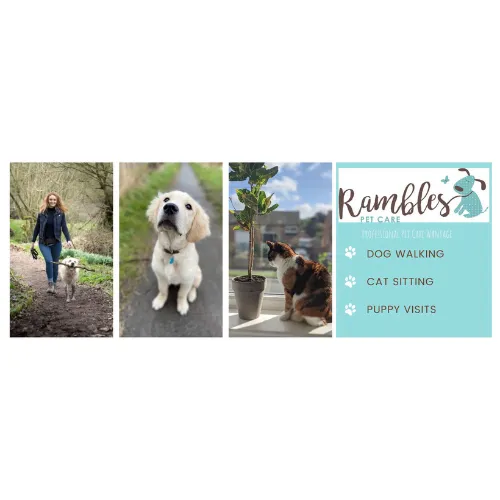 Rambles Pet CarePets, vets & animal care · Wantage
 Lamont WalkiesPets, vets & animal care · Wantage
 We Love Pets Wantage and GrovePets, vets & animal care · Wantage
 Holiday Ark Pet ServicesPets, vets & animal care · Wantage
- PPet Care For YouPets, vets & animal care · Wantage
Run through this before you book a first appointment:
- Experience with your breed’s coat, especially double coats and anything that mats.
- Whether vaccinations need to be in date, and what proof they want.
- How long the appointment takes and whether you wait or come back.
- How dogs are dried, and whether they are left in a cage or kennel at any point.
- What they do with a nervous or elderly dog, and whether a short taster visit is possible.
- Whether nails, ears and teeth brushing are included or extra.
- The cancellation policy, since many groomers work alone.
- Parking, and whether you can pull up outside with a big dog.
Regular short appointments usually work better than one dramatic clip a year, and a groomer will tell you how often your breed needs doing.
Walks, dog sitting and day to day help
Good pet care in Wantage is as much about the ordinary week as the vet’s waiting room. Dog walkers and sitters cover the school day and the holidays, and it is reasonable to ask about insurance, how many dogs go out together, and whether they walk on lead or off.
For your own walks, two routes close to town are easy with a dog. Wantage town and the Letcombe Brook is 1.8 miles (2.9 km) and easy, and keeps you on paths and pavements. The Wantage Arm and the Wilts & Berks Canal is 4.2 miles (6.8 km), also easy, starting from East Challow. Both suit a dog that needs a steady plod rather than a hill.
- Wantage town and the Letcombe Brook 1.8 miles · Easy
- The Wantage Arm and the Wilts & Berks Canal 4.2 miles · Easy
If the plan involves lunch afterwards, the dog friendly places list shows which pubs and cafés say dogs are welcome. On the farmland and open ground above the villages, keep dogs on a lead near sheep and young stock, and shut gates behind you. See the full set of mapped local walks if you want something longer.
Moving to Wantage or Grove with a pet
If you are arriving on one of the new estates, register with a practice before the boxes are unpacked. Kingsgrove, north-east of town, was being built at the last check in September 2026, with about 1,534 homes by St Modwen and a central park that is useful for short dog walks. Grove Airfield (Wellington Gate) was also being built at that check, with around 2,500 homes planned by Persimmon Homes and a community park in the scheme.
North of Grove, Monks Farm was being built when last checked in June 2026, with about 885 homes, open space and a bridge over the brook. From all three, the trip to vets in Wantage or Grove is a short drive, but it is worth doing once on a quiet afternoon so you know the parking before you do it with a hurt dog. Statuses on those pages are updated as the sites progress; the wider picture is on the developments pages.
Tip: take a photo of your pet’s vaccination card and microchip paperwork when you move, so the details are on your phone when a receptionist asks.
Checking details before you go
Hours, fees and the out of hours arrangement all change, and practices sometimes pause new registrations when they are full. Ring before you travel, and ring again if you are relying on a Saturday appointment. Groomers and dog walkers often work alone, so a text the day before saves a wasted trip.
From here, the veterinary practices category keeps the contact details and maps in one place, and the other local guides cover eating out, days out and getting things fixed around the house.