

Filling the gap
Wantage Road station, opened in 1846, lay more than two miles from the town. In 1873 a group of local people formed the Wantage Tramway Company to close the gap. Its standard-gauge line, about 2½ miles long, was laid cheaply along the side of the turnpike road (now the A338) from Mill Street in Wantage to the station yard, with stops at Oxford Lane and Grove Bridge and passing loops along the way. It opened for goods on 1 October 1875 and for passengers on 11 October.
From horses to steam
The trams were at first drawn by horses. The company soon experimented with mechanical power. A steam tramcar designed by John Grantham was tried in 1875 and entered regular service from 1 August 1876, one of the earliest uses of steam on a British street tramway. Steam locomotives followed, and compressed-air trams were tried without success in 1880. Over its life the company owned seven locomotives, from small enclosed tram engines to conventional tank engines.
Jane, or Shannon
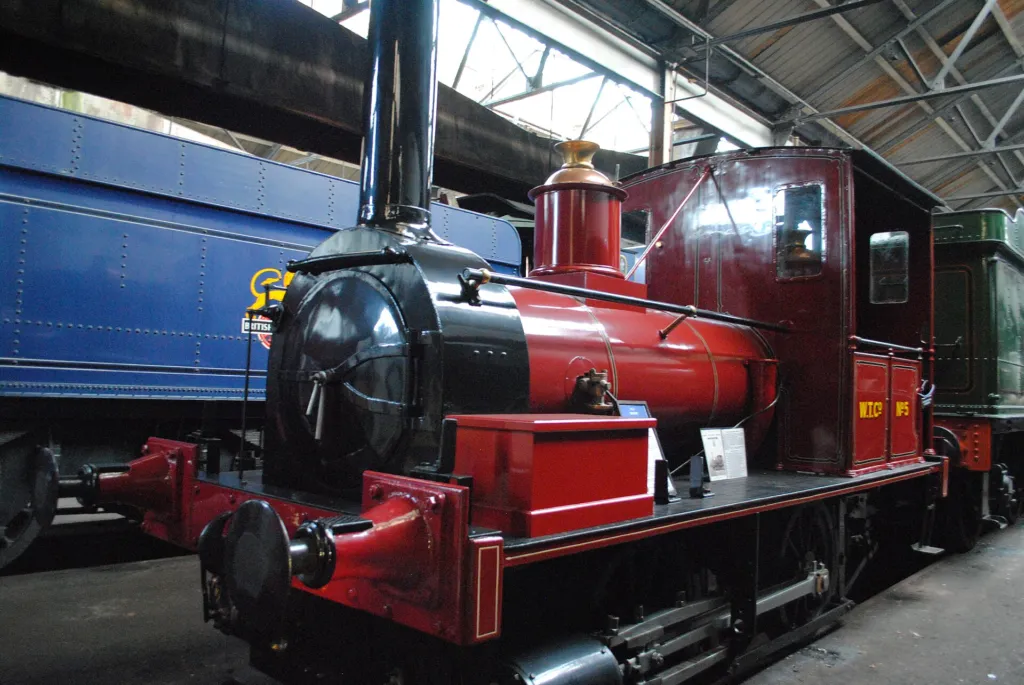
The best-known of them is No. 5, a little 0-4-0 well-tank built by George England and Co. in 1857. It had worked on the Sandy and Potton Railway, where it was named Shannon, and later for the London and North Western Railway. At Wantage it was known as Jane. It worked the line for decades and survives at the Great Western Society’s Didcot Railway Centre.
Decline and closure
For most of its life the tramway was busy and paid its way, carrying goods as well as passengers. It stayed independent throughout and was never absorbed by the Great Western. Motor buses and lorries took its trade in the 1920s, and passenger services ended on 1 August 1925. Goods traffic continued through the Second World War, but heavy wartime lorries damaged the roadside track, and the line closed in December 1945. Sources give the closure date as either 21 or 22 December.
A local story tells how in 1934 Arthur Hitchcock, a one-legged chimney sweep, raced his donkey against the tram and won.